|
From the Borough of Greenwich Free Press, 7 October 1865.
The Alleged Poisoning of a Lady at Greenwich.
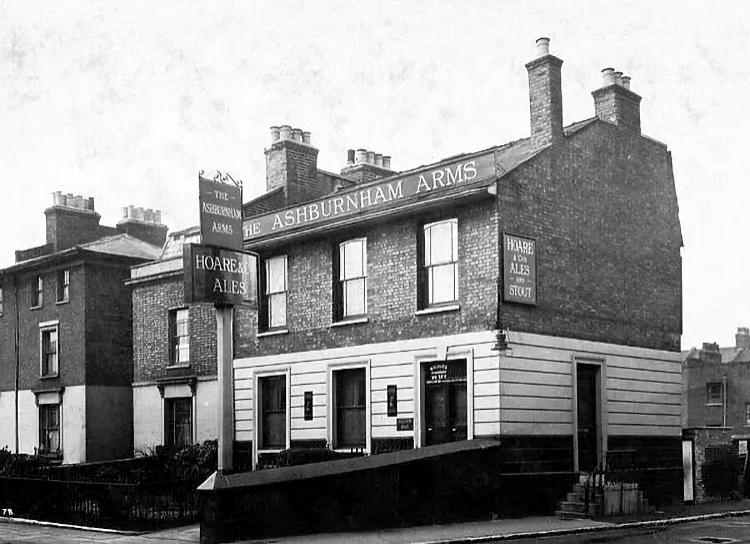
Mr. Carttar, coroner, resumed for the sixth time an inquiry at the "Ashburnham
Arms," Greenwich, on Thursday, into the circumstances attending the death of
Mrs. Elizabeth Reeve, age 40, wife of a veterinary surgeon, residing at
Greenwich, which occurred on the very suspicious and mysterious circumstances by
the administering of veratria or white hellebore.
Mr. Norton, solicitor, attended as the legal advisor of the husband of the
deceased, who also appeared in discharge of his recognizances.
The first witness called was Charles Digby, a police-sergeant, who, in answer to
questions put by the coroner, stated the result of the search he made at the
house of Mr. Reeve on the 21st ult. In a desk in the back parlour and in a
surgery he found some waters wrapped in paper; there he handed to Professor
Rodgers. He also found a small phial, and a paper containing a brownish powder.
In a coat pocket he found a memorandum, respecting a call to be made by Mr.
Reeve on Dr. Wright. Witness could not say that Mr. Reeve believed himself with
impropriety, but he ran up and down stairs several times in a most excited
state. Witness had ascertained that some white hellebore had been purchased off
Mr. Baldwin, herbalist, of Greenwich, by a gentleman who was described as tall
and dark.
The son of Mr. Baldwin was then called, and deposed to selling some hellebore as
stated, but could not identify Mr. Reeve as the purchaser. No entry was made of
the person making the purchase, but he was confident he sold it before anything
was heard of this affair.
Professor Rodgers, 25, Sussex Street, Warwick Square, said:- Sergeant Digby gave
me a packet of powder which I have carefully analyzed. It weighed, I dare say,
about half an ounce, and I have a small portion of it left and with me now. (The
remaining portion was here handed to the jury, the coroner recommending them not
to smell it or they would feel the effects of it for hours.) I separated from
the powder produced the same alkaloid which I found in the body of the deceased.
The powder is not pure white hellebore, but a compound, all the parts of which
it is difficult to tell. It is an acrid and extremely irritant poison. A letter
given me by the sergeant contained white arsenic, which appears to have nothing
to do with the present investigation.
Mr. Baldwin here returned into court with the white hellebore powder sent for,
and on examining it Professor Rodgers said it was not the same powder as he had
analyzed, the color and smell being different. (The sample brought by The
witness was purchased by the coroner, and given to Professor Rogers to examine
at his leisure.)
William George Reeve, son of deceased, said that he was 12 years of age, and
before being sworn his intelligence was elicited by his replying to the
coroner's question, if he knew what was an oath. "It is a religious obligation
to tell the truth." He was then sworn, and having explained his mother's illness
and death, as already reported, said. - Three days before my mother's death she
said to me, "George, I shall never get over this confinement." I replied, "Oh
yes, ma. You will; you have often said so before." She said, "It's no use,
George, I shall never get over it; but don't tell pa, because he has so much
bother and anxiety it will break his heart." On the Saturday previous to my
mother's death she put all her things straight in the drawers, saying, "I shall
never want them anymore."
Mr. Reeve here stood up as if anxious to make a statement, and was asked by the
coroner if he had anything to volunteer by way of explanation.
Mr. Norton:- He is here to answer any questions put by the coroner or jury.
The Coroner:- Then I have no questions to ask him.
Catherine Webb, widow, deposed to being engaged to attend the deceased in her
expected containment, and said the deceased twice told us she should not get
over it, expressing a hope that witness would do all she could for Mr. Reeve and
the children while she was in the house.
Mrs. Meeder, residing at Bow, was called by Mr. Norton, and said that on the
19th July, Mrs. Reeve visited her and said, "It is all over with me; I shall
never get over my confinement. I suppose it will be another great tiresome boy,
and I am so sick of children."
The coroner here pointed produced a diary of Mr. Reeve found by Sergeant Digby
on searching the house. It consisted of 30 or 40 closely written pages of
foolscap paper. From the 10th of March to a few days proceeding the death of
deceased there was no allusion direct or indirect, made to Mrs. Reeve; and in
several cases it was very doubtful whether the entries were made on the day they
purported to be. On the 14th of August the diary stated that on Monday Mrs.
Reeve was seized at half past two o'clock with fits of unconsciousness which
lasted till the time of her death on the Tuesday morning. After the post mortem
examination proved by the coroner everything that occurred was trying to
chronicled with the greatest apparent minuteness. The entry on the 15th was. "My
dear wife died a little after eight this morning, after a severe attack of
convulsions. God receive her soul." Another entry referring to another day says
that Messrs. Child and Lloyd visited him. The letter shocked him by saying that
his wife told him Mrs. Lloyd "that her money would be the death of her, and that
if anything happened to her, Mrs. Lloyd was to see into it." In referring to the
money Mr. Lloyd said, "Not that I knew Mrs. Reeve had anything." He "Mr. Reeve)
was convinced, the diary stated, that Mr. Lloyd was lying, from the fact of
having discussed family matters with him at Norwood on the propriety of having
another trustee appointed under Mrs. Reeve's marriage settlements, on which
occasion she told him she had £1000. The diary put the question "is it possible
that if my wife anticipated foul play she would have kept the secret to herself
till Thursday last? I believe the Lloyds got it up from more wickedness and
spree with a view of hurting my feelings." The diary also entered at some length
into the facts and incidents connected with his wife's illness, stating that she
always had lingering confinements. The entry on August 20, stated that he buried
his dear wife in Forest Hill Cemetery in mother's grave; all the children were
presents, and each threw a bouquet on the coffin. His blessing, his love, his
all followed her to the grave. She was a fond, good, faithful, devoted, and
virtuous wife and mother.
The room was then cleared, and on the public being re-admitted, the coroner
announced the inquiry was adjourned for a fortnight.
|
|
From the Borough of Greenwich Free Press, 21 October 1865. Greenwich.bmp"
The Mysterious Death of a Lady at Greenwich.
On Thursday Mr. Carttar resumed and concluded and inquiry, of which full
particulars have appeared, respecting the death of Mrs. Elizabeth Reeves, age
40, wife of a veterinarian surgeon, who died on the 14th of August last, after a
brief illness, and the very mysterious circumstances, as detailed buy witnesses.
Mr Francis Norton, solicitor, of Clifford's Inn, again appeared on behalf of Mr.
Reeve, the husband of the deceased, who had for some time past been bound over
in the sum of £100 from sitting to sitting to be in attendance.
There was also a large number of eminent medical men present, and the court was
crowded by some of the leading inhabitants, anxious to hear the result. It will
be recollected that Professor Rodgers, in analyzing the contents of the stomach
of the deceased, detected the presence of an alkaloid known as veratria, the
administration of which would produced vomiting and convulsions. For some time
suspicion rested upon the husband, who was entitled to £1,050 on the death of
his wife, but evidence was given to show that the deceased had taken the
veratria herself with a view, to procure abortion, as she was approaching her
confinement, and had to several persons expressed her dread of it, and fear that
she should never recover hoping that the child might not live.
After hearing two unimportant witnesses, the coroner proceeded to sum up, and
said that the question which the jury would have to decide assuming that they
agreed with the medical evidence that death had resulted from the effects of
veratria - were, whether the poor lady, had taken the poison herself, either
with a view to commit suicide or to procure abortion. He considered that there
was no evidence to support either of these, and that the poison must have been
administered by some other person.
The jury, after an hour's consultation, returned as a verdict, that the deceased
died from the effects of a certain poison known as veratria or hellebore, but
how, when, or by what means the said poison was administered there is not
sufficient evidence to show; and the jury further say that the administration
was not the act or the deed of the deceased herself.
|








 )
)