|
From the Kent Herald, 14 November 1833
Plumstead. Murder by Poison.
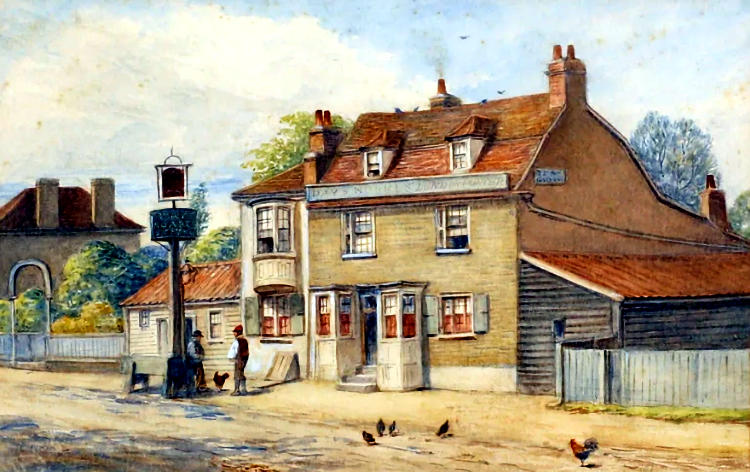
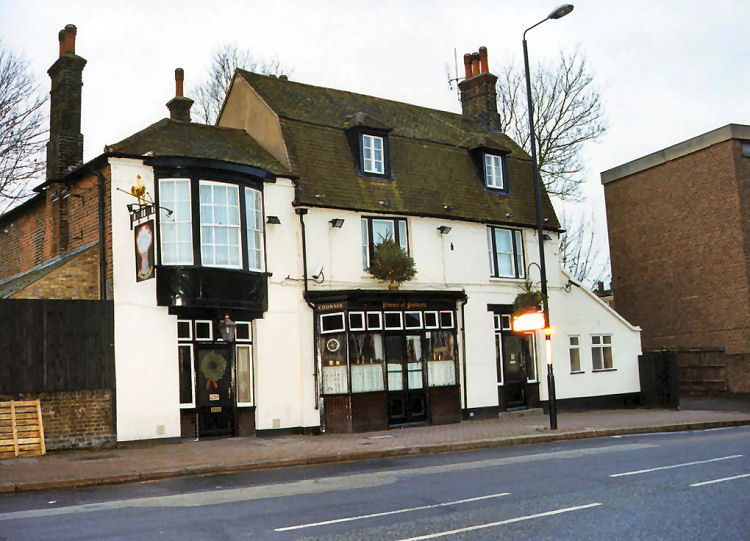
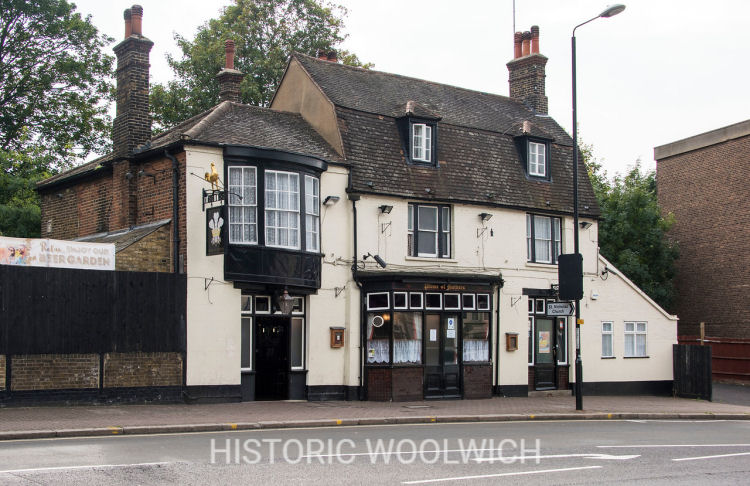
On Wednesday, and inquest was held at the "Plume of Feathers," Plumstead
Common near Woolwich, on the body of a gentleman of independent
property, named George Bodel, age 81 years, who had been poisoned with
arsenic administered in coffee. The whole family, consisting of six
persons, had partaken of the same coffee, and was seriously affected;
but by prompt medical aid, the lives of all were saved except that of
the above named aged individual. Mr. J. Butler, surgeon, deposed, that
on the proceeding Saturday he was called to the house of the deceased.
He found the whole family retching violently; and suspecting they had
taken mineral poison, he administered whites of eggs, of which he could
persuade deceased to take but a small quantity. From questions put to
the sufferers, he gathered that the poison must have been a ministered
to them in the coffee which they had drunk at breakfast. Next day all
his patients were better except the deceased, who (instead of the
medicine's which witness left), had drank a pint of ale. Dr. Sutton, of
Greenwich, was called in; but Mr. Bodell died at six o'clock on Tuesday
evening. Witness procured the coffee pot and its contents, the
"grounds," from a person who always had it after the family had
breakfast. Mr. Marsh, a chemist, deposed, that he received from Mr.
Butler a quantity of coffee, he analyzed it, and found that it contained
arsenic; but to what extent he could not say. The Coroner said it was
necessary to as a time whether the coffee had contained arsenic enough
to poison all the family, as that would tend to show whether the poison
had been put into the kettle from whence the water was taken to boil the
coffee, or whether it had been put into the coffee pot. It was explained
to the Coroner, that the kettle had been cleaned by the servant, after
it was boiled on the morning in question, it being part of her duty to
clean the kettle every Saturday.
Sophia Taylor, servant to the deceased, deposed, that on the morning of
Saturday she was lighting the fire, when J. Bowdell, a grandson of the
deceased, came to the door, and began talking to her, saying she was put
up late, and all behind with her work. He then said, "I will fill the
tea kettle," and he went out with it to the pump, which is close to the
door of the kitchen where the witness was at work. She did not see him
pump the water, but heard the pump at work. He did not bring the kettle
in at once; but set it down on the outside of the door, and in a short
time he said, "I have not yet done all my work." He then brought the
kettle, and hung it over the fire. She then got him a can of milk, which
he has been in the habit of coming for; and he went away. At half past
eight, Mr. And Mrs. Bodell had their breakfast of coffee and toast. She
made the coffee from the canister which are master always kept locked
up. She looked at the coffee pot before she put any in, and found it
perfectly clean. She then made the coffee from the said kettle. About
half an hour after Mr. and Mrs. B. had done their breakfast, Elizabeth
Smith, her fellow servant, who is deaf and dumb, and a Mrs. Evans, sat
down to their breakfast from the same coffee, with a little addition,
and the water from the same kettle; in a short time four of them were
taken ill.
Henry Parker, a cow boy employed on the premises was next sworn. He said
on Saturday morning, being late for his work, he did not fill the
kettle, which was his usual business, but went and fetched the cows
home.
When he returned he found J. Bodell, and S. Taylor, the servant, in the
kitchen, and J. Bodell said to him, "I have done all your work;" but
witness finding the kettle was not on the fire, took it from the outside
of the door and placed it over the fire, and then went out again. He was
sure that he had put it on the fire. Had never known J. Bodell to do any
such thing as fill the kettle before. The Coroner here cross-examined
this witness, when he found that the man did not know the different
season of the year, nor how many days there were in a month. The Coroner
expressed his doubt as to the sanity of the witness, and told him to go
down and composed himself, and he would be called up again, but he was
not called anymore that evening.
Mr. Evans, a chemist in Powis Street, deposed that he sold small
quantities of arsenic to J. Bodell, who said it was to destroy rats. The
first lot of arsenic was brought by that person about a fortnight ago;
but he had brought two lots since on either last Thursday or Friday
Night. J. Bodell, who had absconded from the village on Tuesday morning,
but had been apprehended in London by a constable, was in the room, in
custody, while Mr. Evans was giving his evidence. He denied having
purchased the first lot of poison, but said nothing as to the others.
The investigation was then adjourned till Monday, in order that a post
mortem examination of the body might take place, and that other evidence
might be obtained. The prisoner, J. Bodell, was allowed to remain for
the present in custody at the house of the constable.
Various rumours are about respecting the dreadful affair. It is said
that other parties are implicated. A large quantity of arsenic was found
in the box of the prisoner, as well as phial and a glass. The deceased
is supposed to have been worth about £30,000. During the inquest a long
discussion arose as to who should prosecute. It is stated that the
deceased son-in-law, a Mr. Baxter, having 13 children, and not being
entitled to any of the deceased property till the death of the widow,
could not be expected to incur the expense of the prosecution. Nor,
ought the father of the prisoner, though the son of the murdered man, to
be called onto prosecute his son? The Coroner settled this dispute by
binding the parish to prosecute.
Further Particulars.
Another account of this deplorable transaction says:- The individual
poisoned was an old farmer, of upwards of 80 years of age, renting
formally a large farm under the University of Cambridge. He made a
fortune, gave up his large farmer and, up to the time of his death,
employed himself in cultivating a smaller farm. His son was occasionally
employed by him, and this son, in better times, was a larger farmer even
than the old gentleman; but dissipation and unbounded love of wine and
woman ruined him, since at last he had to superintended his father's
business. He has two sons - the eldest attached to him - but the
youngest is a favourite of the mother, and has been working (so report
says) with her to secure something for themselves. This youngest son is
the person suspected of the poisoning of his grandfather. He is, we
Learned, and excessive fop. He kept lightly, for an uncle of his, a
coffee shop in Smithfield, but was obliged to leave it and returned to
his mother, who lives at a distance of 300 yards from the house of old
Mr. Bodell, who was poisoned.
Monday. Adjourning Inquest.
The inquest on the body of Mr. George Bodell, who is supposed to be
murdered, was resumed this evening at the "Plume of Feathers," Plumstead,
before Mr. C. Carttar, Esq., Coroner, and Jury. After the examination of
several witnesses the inquiry was further adjourned to Tuesday morning.
Tuesday.
The jury resumed the investigation this day, and after further evidence
had been produced, and other witnesses examined, the inquest was again
adjourned.
|
|
From the Kent Herald, 21 November 1833
The Murder of Plumstead.
The inquiry relative to the poisoning the family of Mr. Bodell, at
Plumstead, some particulars of which were given in our last number,
terminated on Friday, on which day the Coroner summed up the evidence,
and the Jury, after retiring for half an hour, returned a verdict "That
John Bodell the younger, the prisoner in custody, is guilty of willful
murder as against George Bodell." The prisoner was committed to
Maidstone gaol for trial, and Mr. Mason, one of the deceased's
executors, was bound over to prosecute, the witnesses were also bound
over to appear at the Assizes.
After a verdict of the Jury was pronounced on Friday night John Boell,
the deceased grandson, was taken into a room adjoining that in which the
Jury had assembled, and shortly after Mr. Colquboun, his solicitor,
requested Mr. Butler, the surgeon, to visit him. Mr. Butler did so, and
found him in a most distressing state; the tears were streaming down his
face, and he became quite hysterical; he would have sunk on the ground
but for the support of the constable. Brandy and water were given to
him, and some persons in the room endeavoured to console him by observing
that the verdict of the jury was not evidence of his guilt, and that on
the trial he would have the opportunity of proving his innocence. The
prisoner partially recovered, and then, in the most emphatic manner,
said "I am innocent." He continued to weep, and having several times
exclaimed "Oh my poor mother!" Mr. Butler asked him if he wished to see
her. He replied that he very much wished to see her that night. Mr.
Butler instantly went to a her house, and returned with her in his
phaeton to the inn. On beholding her the prisoner burst into a flood of
tears, took hold of both her hand and with his head resting on them,
wept bitterly. The interview was of short duration, but most effective.
On Friday night the prisoner was confined in Plumstead cage, and two
constable sat up with him. The next morning when he parted from his
mother, sister, and other female branches of the family, the scene was
most affecting.
On Saturday morning the deceased was buried in Plumsted churchyard. Most
of the family, including John Bodell, the son, attended the funeral. The
hurse containing the body of the deceased, on the way to its resting
place, was met on the road by the prisoner, in custody, on his way to
Maidstone Gaol. After the funeral 13 of the party, including the
prisoners father, dined at the deceased house. The father of the
prisoner did not appear much concerned at the melancholy situation of
his son, he partook of dinner, and was apparently the least concerned or
affected of the whole party.
|




 )
)
