|
Ramsgate Road
Sarre
01843 847808
http://crownsarre.co.uk/
https://whatpub.com/crown-inn
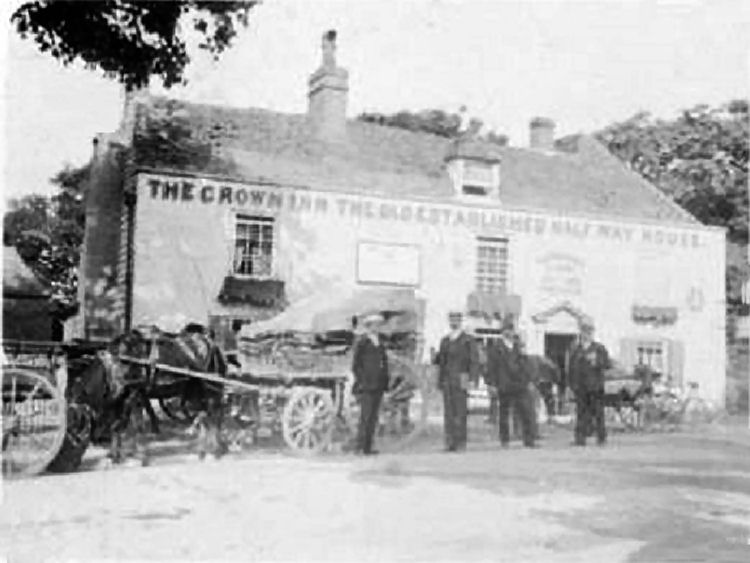
Above photo circa 1900, kindly sent by Rory Kehoe. |
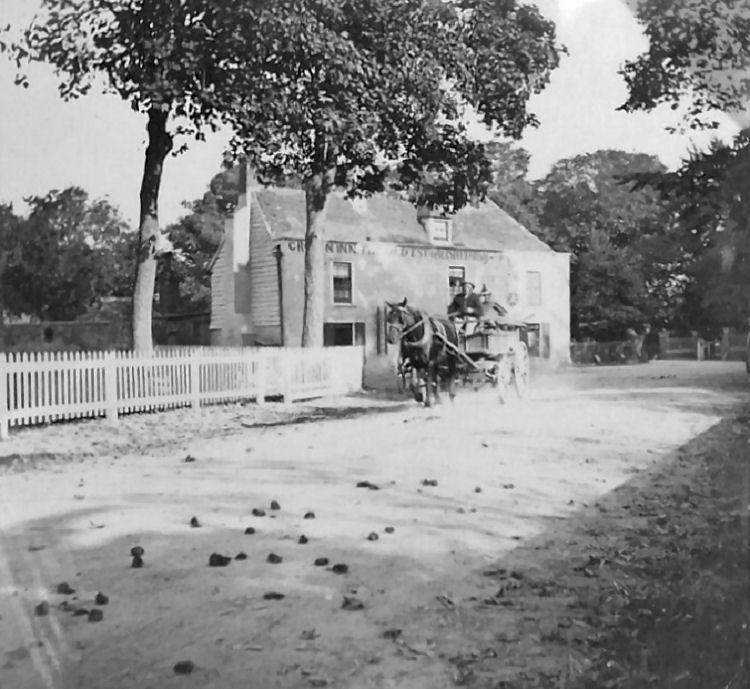
Above photo circa 1900, kindly sent by Rory Kehoe. |
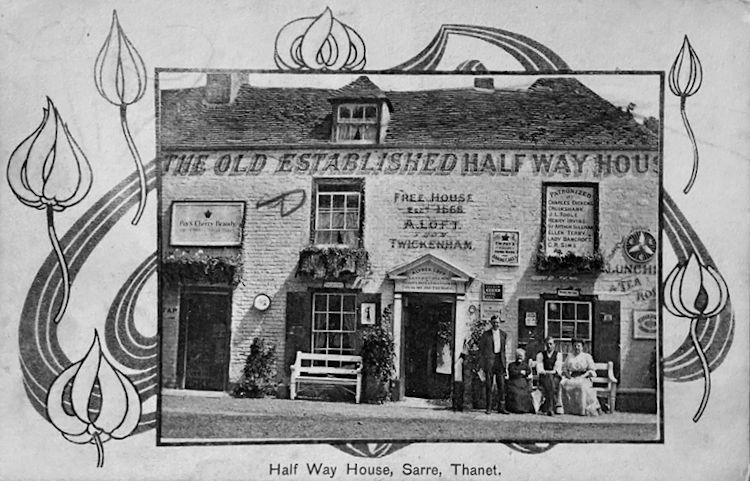
Above postcard, post marked 1904, kindly sent by Rory Kehoe. |
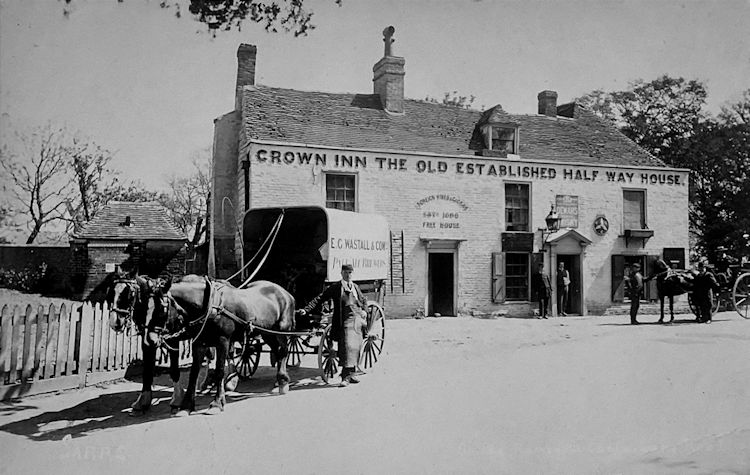
Above photo circa 1896, kindly sent by Rory Kehoe. According to
various sources, in the early years of the 20th century, the Crown was a
tied house, within the estate of Frances A White's Stourmouth Brewery.
After White's death in December 1904 the brewery and its small tied
estate was sold to Flint's St. Dunstan's Brewery. Although Gardner's Ash
Brewery appears to have bid more for the Stourmouth brewery and its 11
pubs, the Flint and White families were related by marriage, so this
might have had a bearing on the matter. However, Flint's Brewery appears
not to have wanted to retain the Crown within its tied estate, as in
1910, they sold it to Shepherd Neame's Faversham Brewery.
The 1896 photograph clearly shows the Crown as a free house, which
was something of a rarity in those days. Perhaps Francis A White's
Brewery purchased the freehold of the Crown c.1900? Unknown at this
stage but what is sure, is that no photograph (to date) shows the Crown
in the livery of White's Stourmouth Brewery. The wagon in the foreground
is interesting, as it is, in fact, a brewer's dray. Just visible on the
canvas are the words "E G Wastell & Company, Pale Ale Brewers." E G
Wastell's Thanet Brewery was located on Camden Road, Ramsgate and was
only a small concern, with just two tied houses of its own. Reliant
then, on domestic and free trade sales (a bit like a modern-day
microbrewery) Wastell's appears to have ceased trading just before WW1.
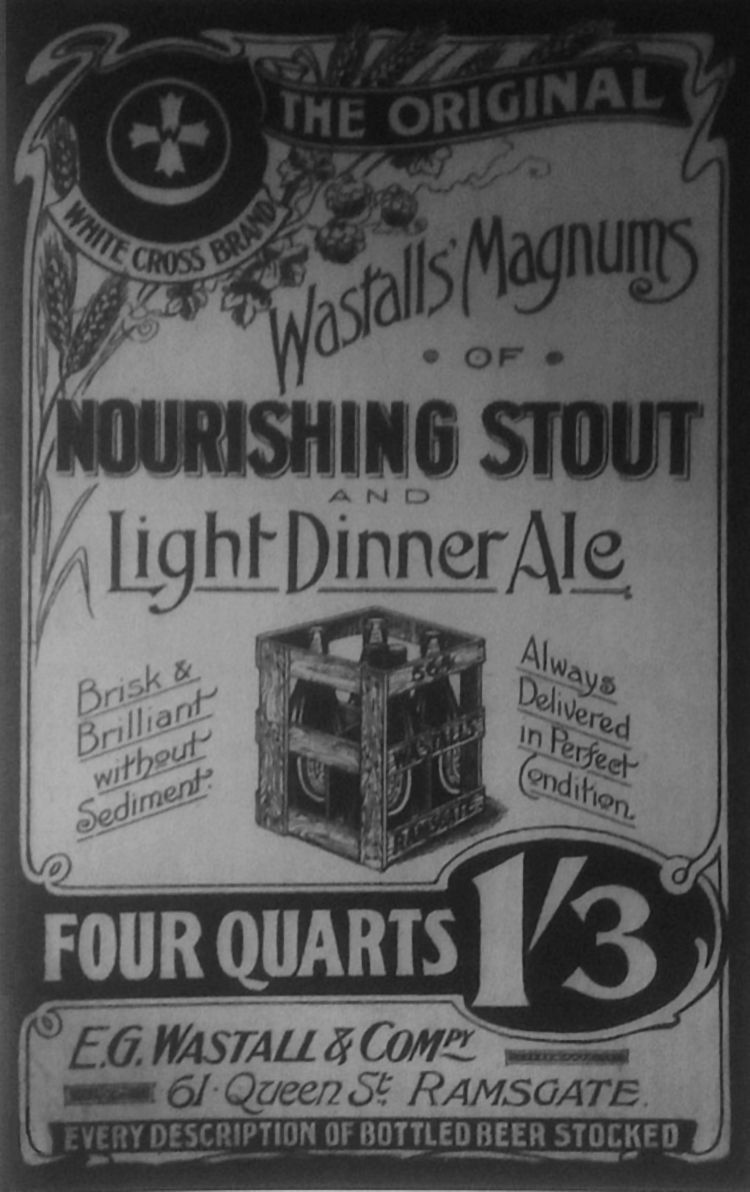
Above showing a circa 1895 advertising poster for Wastell's beers.
Only 1/3d (6p) for 4 x quart bottles! That's a gallon for less than a
penny a pint! Happy days! |
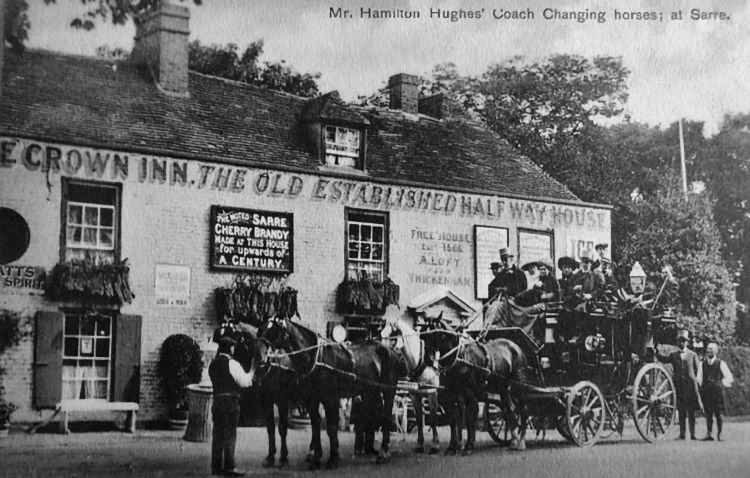
Above photo, circa 1907. Rather than this being a scheduled stagecoach
service, stopping at a coaching inn, this photograph more likely records
the visit of Mr Hamilton Hughes' coach-and-four, as part of a special
day out, or excursion. Given that the passengers appear to be in
mid-Victorian costume, this could have been a Charles Dickens-themed
event. Broadstairs has several connections with Dickens and the "Rose
Hotel," Canterbury, hosted other similar historical events. The
Crown's licensee, Alfred Loft, appears not to have been the sort of chap
to let a good business opportunity go by, so a refreshment stop and some
rest for the horses probably rung his till nicely. It's possible that
the gentleman, far left, in shirtsleeves, may be the enterprising Mr
Loft. Kindly sent by Rory Kehoe: original from Keith "Dicky" Daniel. |
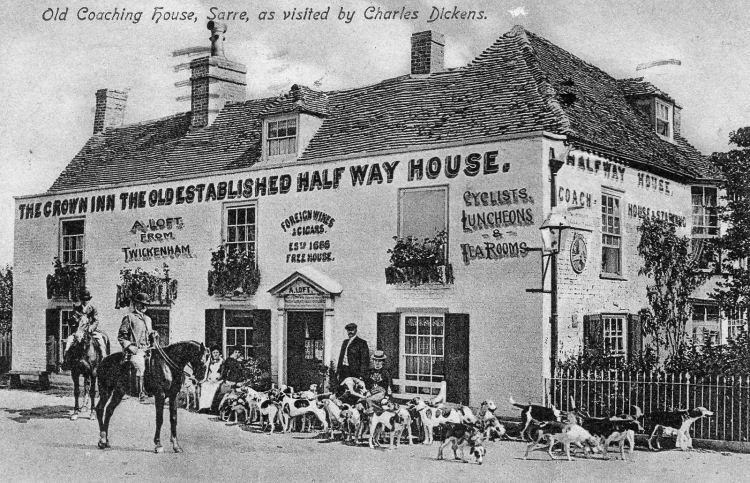
Above postcard, date 1907, kindly sent by Mark Jennings. |
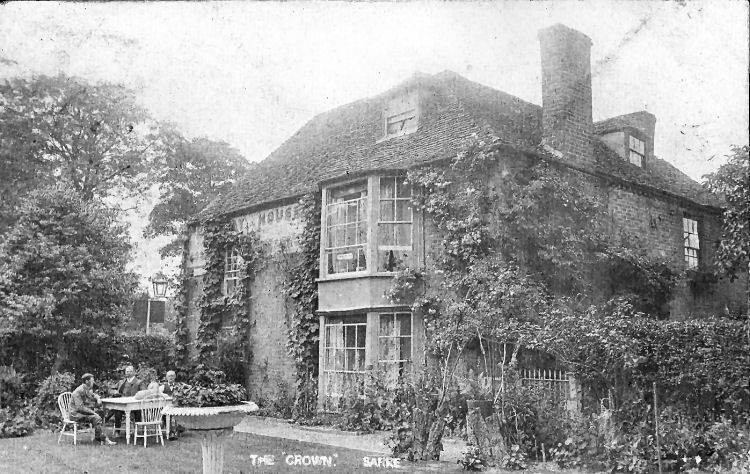
Above postcard, circa 1908, kindly sent by Rory Kehoe. |
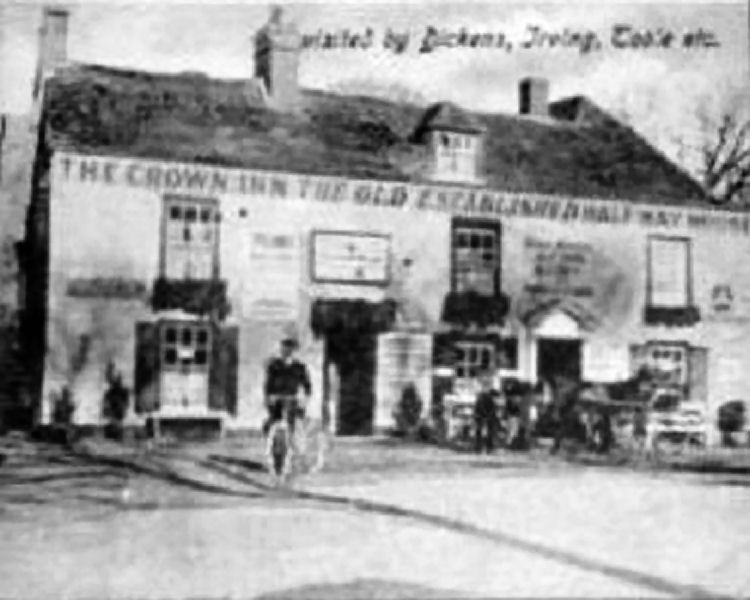
Above postcard, 1908, kindly sent by Rory Kehoe from the collection
of Chris Light, Cheshire."
I previously dated this image as 1908 but as there is an election
poster on the wall, the photo might have been taken in 1906, or 1910 as
there were General Elections in those years. Sadly, I don't know who the
chap on the bicycle is but the pub is sporting a Cyclists' Touring Club
wall sign, so presumably, the Crown was a popular biking destination.
Looks like the Crown also operated as a petrol filling station. Given
the cost of Edwardian photography, this image was probably taken to act
as a business publicity card, which was quite a common practice in those
days. The trap was likely on hand to convey customers to/from Grove
Ferry railway station about 1.5 miles away. The licensee, Alfred Loft,
certainly believed in covering all the commercial opportunity bases! |
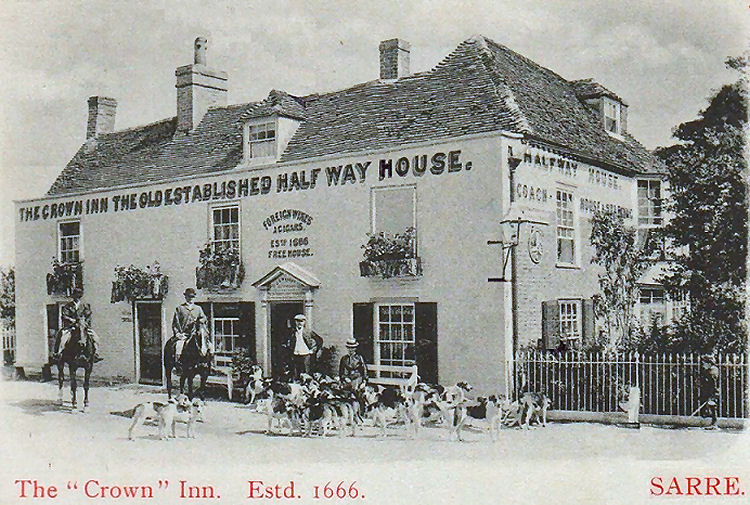
Above postcard circa 1910, kindly sent by Rory Kehoe. |
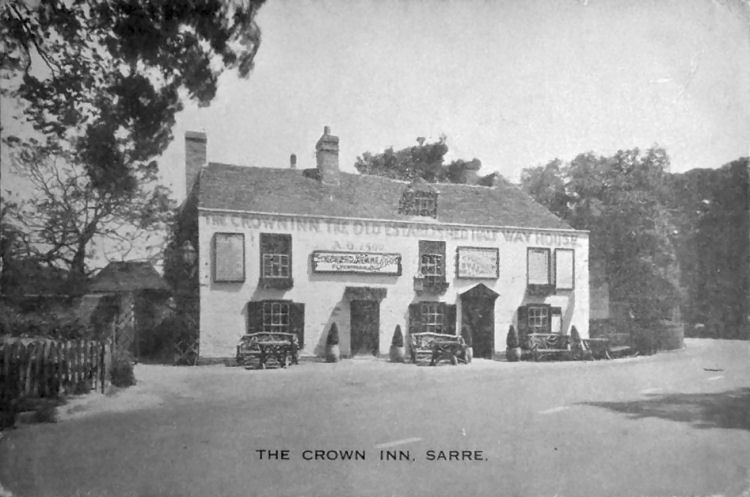
Above postcard, date unknown. |
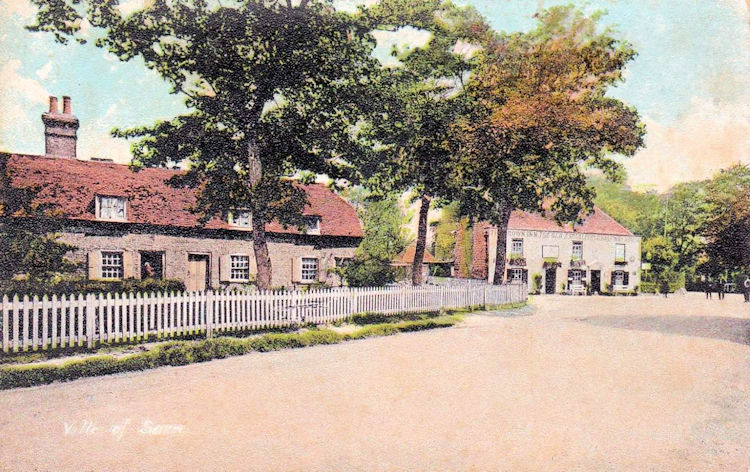
Above postcard, date unknown. |
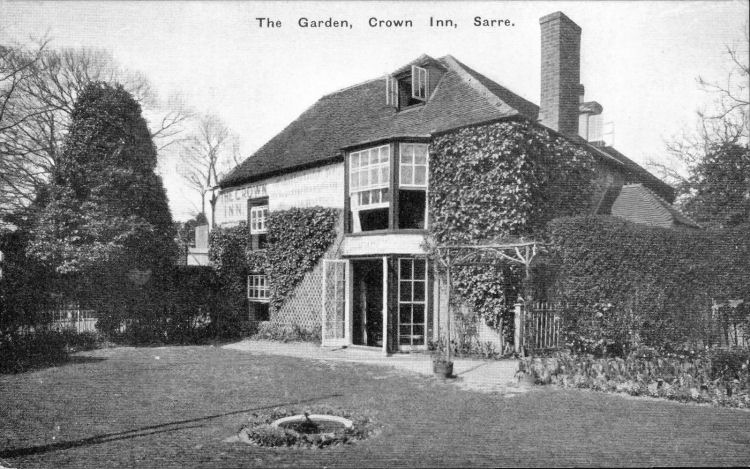
Above postcard, date unknown, kindly sent by Mark Jennings. |
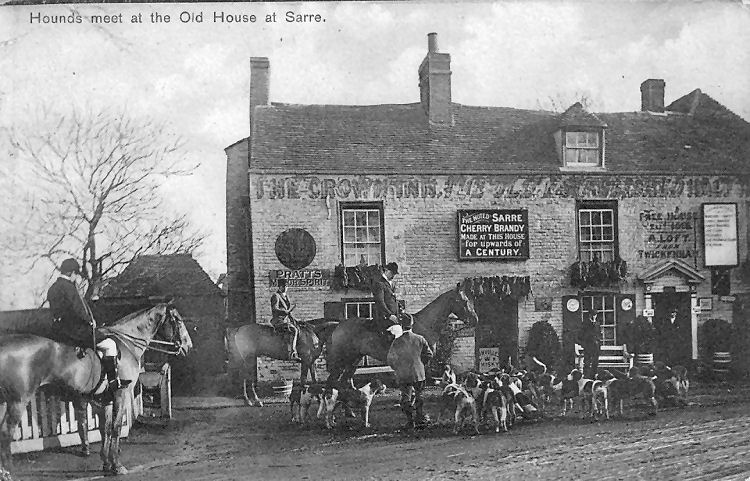
Above postcard, date unknown. |
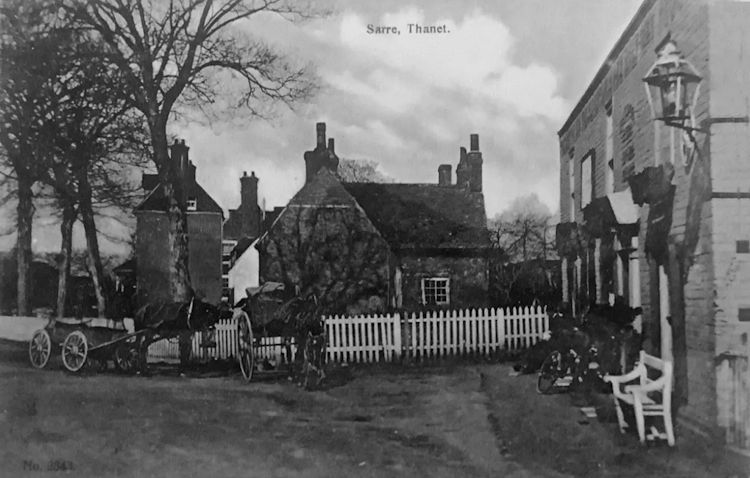
Above postcard, circa 1911, kindly sent by Rory Kehoe. Back in the day,
the Crown was a favourite venue for cycling clubs and this is underlined
by there being a Cyclists' Touring Club wall sign, behind the large
lantern on the near corner of the building. |
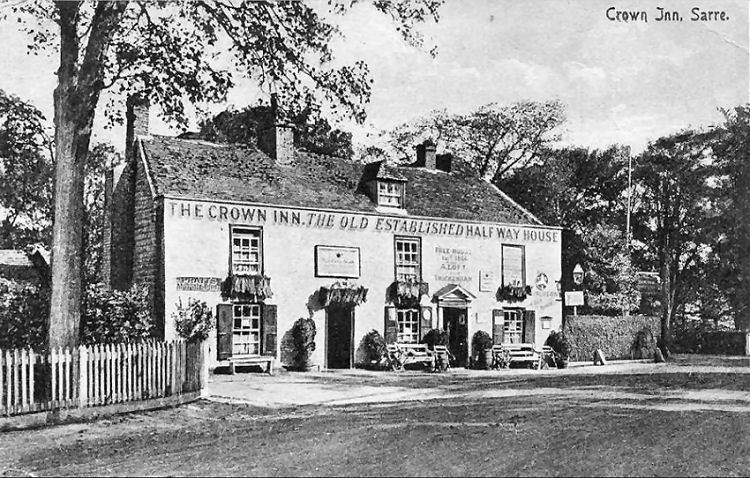
Above postcard, circa 1912, kindly sent by Rory Kehoe. |
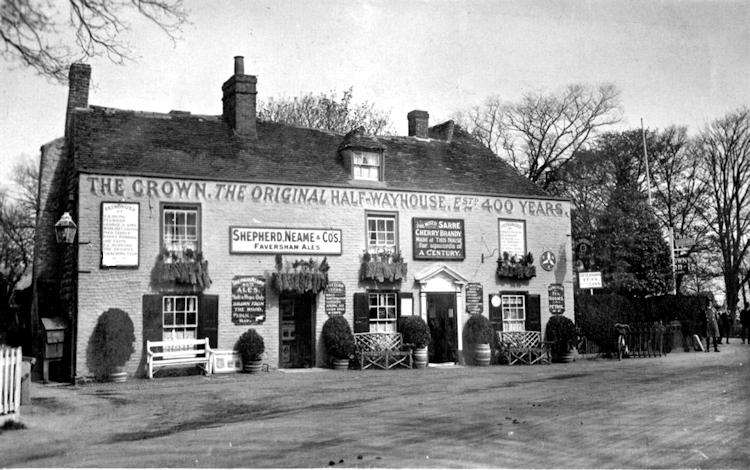
Above photo 1913, kindly sent by Rory Kehoe. To the left of the door:
Shepherd Neame & Co Ales "Malt & Hops Only" Drawn From The Wood. To the
right of the door: Bottled Beers - Bass, Worthington, Guinness, Strong
Ale, Lager Beer & Cider. The sign to the far right of the pub confirms
that the Crown then offered Luncheon, Tea, Rooms and Petrol. The large
wall sign reads: The noted Sarre Cherry Brandy Made at This House for
Upwards of a Century. |
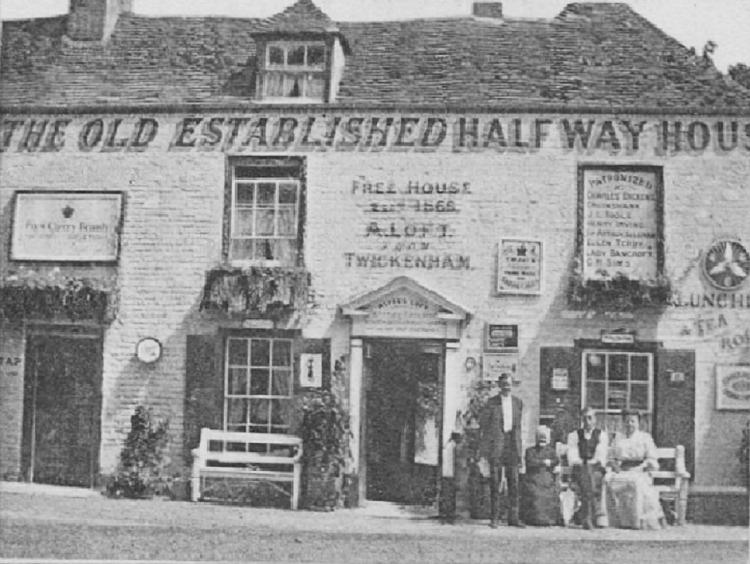
Above photo 1913, kindly sent by Rory Kehoe. Showing Alfred Loft and
family. This is the same picture as the 1904 postcard. |
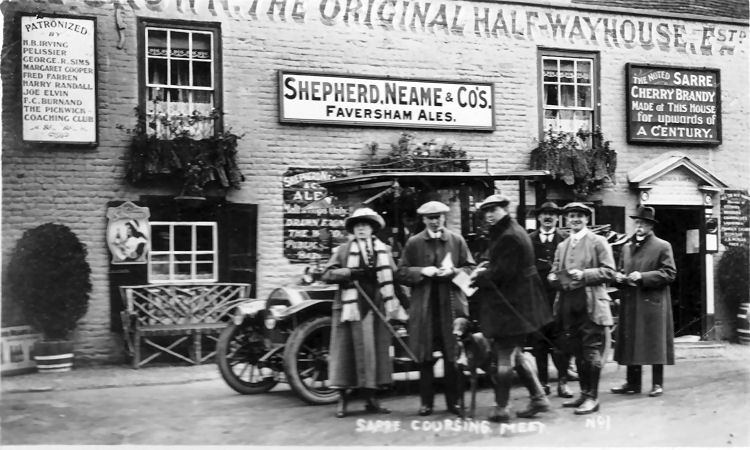
Above postcard, circa 1915, kindly sent by Nick Heading. The board to
the left says the following:- Patronised by M. B. Irving, Pelissier,
George R. Sims, Margaret Cooper, Fred Farren, Harry Randall, Joe Elvin,
F. C. Burnard, The Pickwick Coaching Clun. |
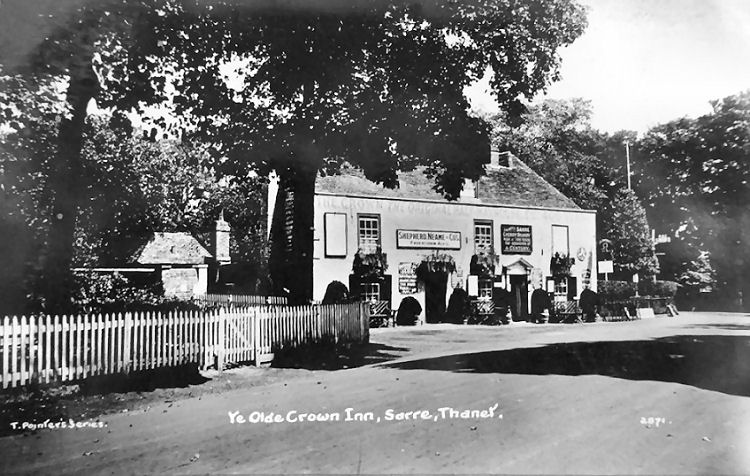
Above postcard 1918, kindly sent by Rory Kehoe. |
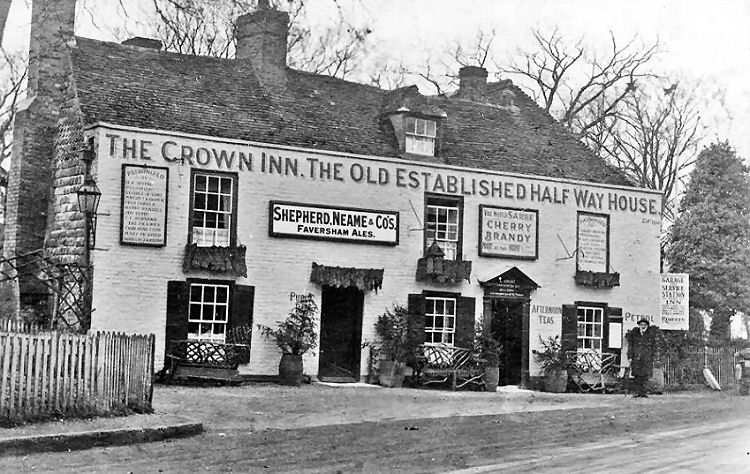
Above postcard, circa 1919, kindly sent by Rory Kehoe. |
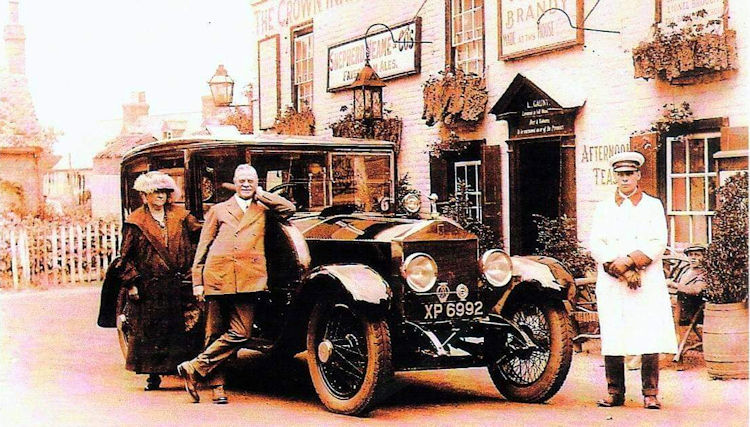
Above photo, date unknown showing George and Alice Smith who lived at
Boughton House, Graveney. |
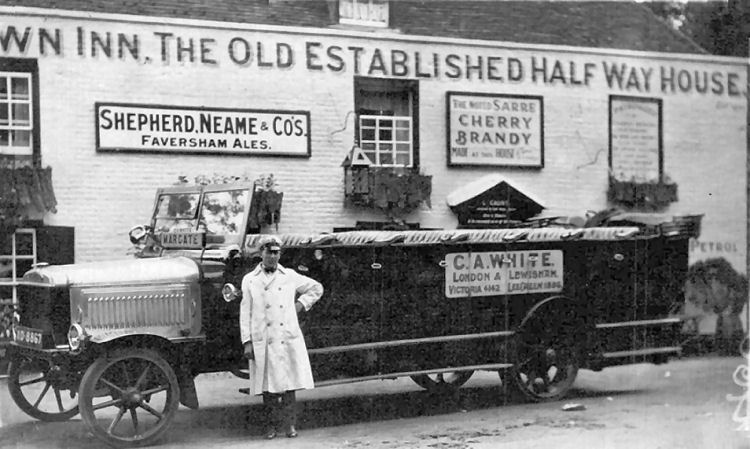
Above photo, circa 1920, kindly sent by Rory Kehoe. |
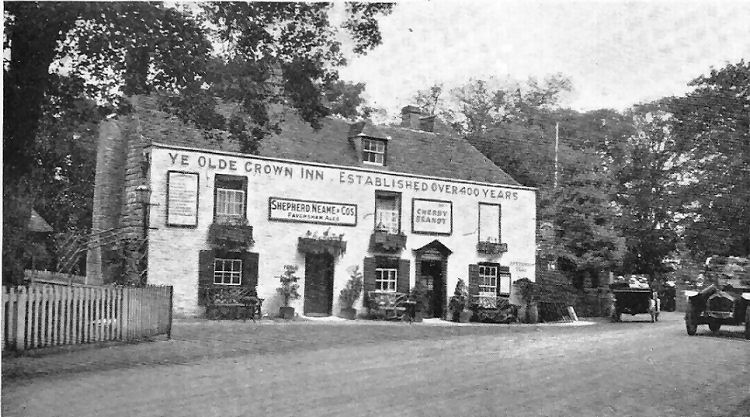
Above photo, circa 1920, kindly sent by Rory Kehoe. |
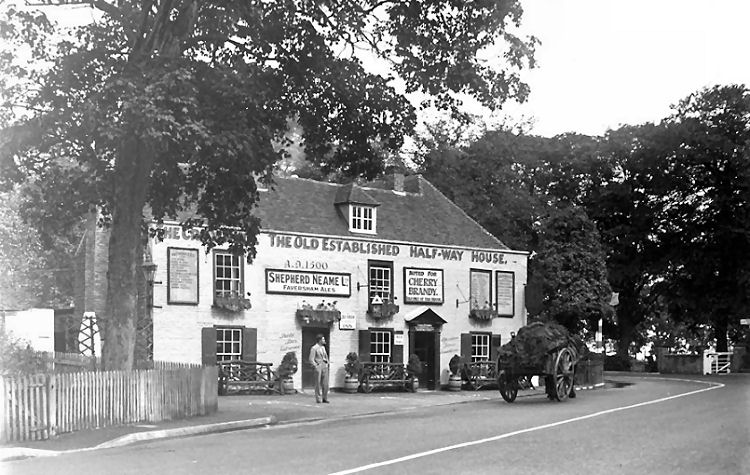
Above postcard, circa 1923, kindly sent by Rory Kehoe. |
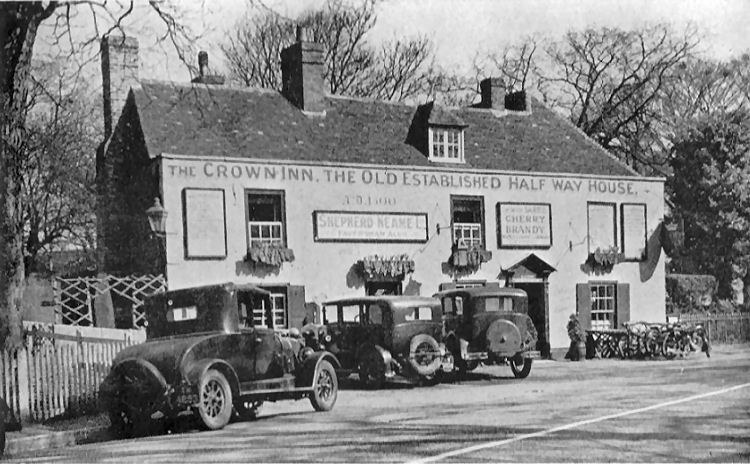
Above postcard, circa 1923, kindly sent by Rory Kehoe. |
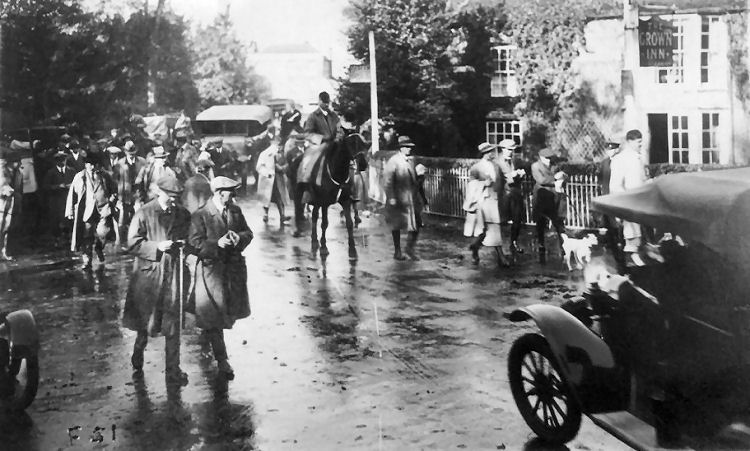
Above photo, circa 1930 showing a meeting of the West Street Hunt, kindly sent by Rory Kehoe. |
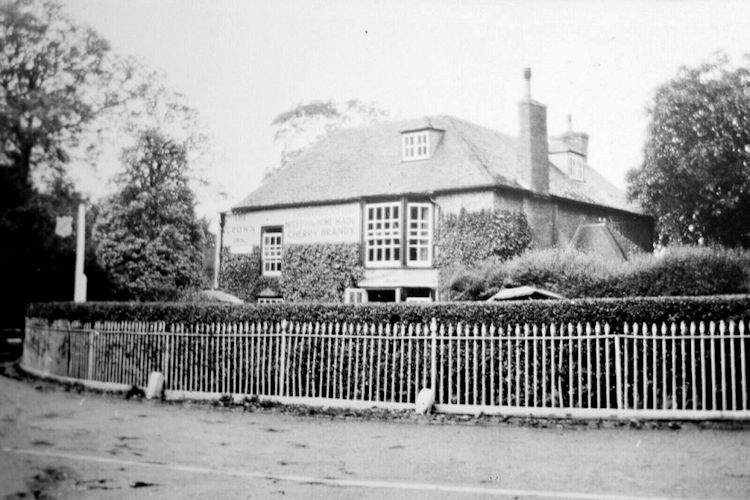
Above photo, circa 1935, kindly sent by Rory Kehoe. |
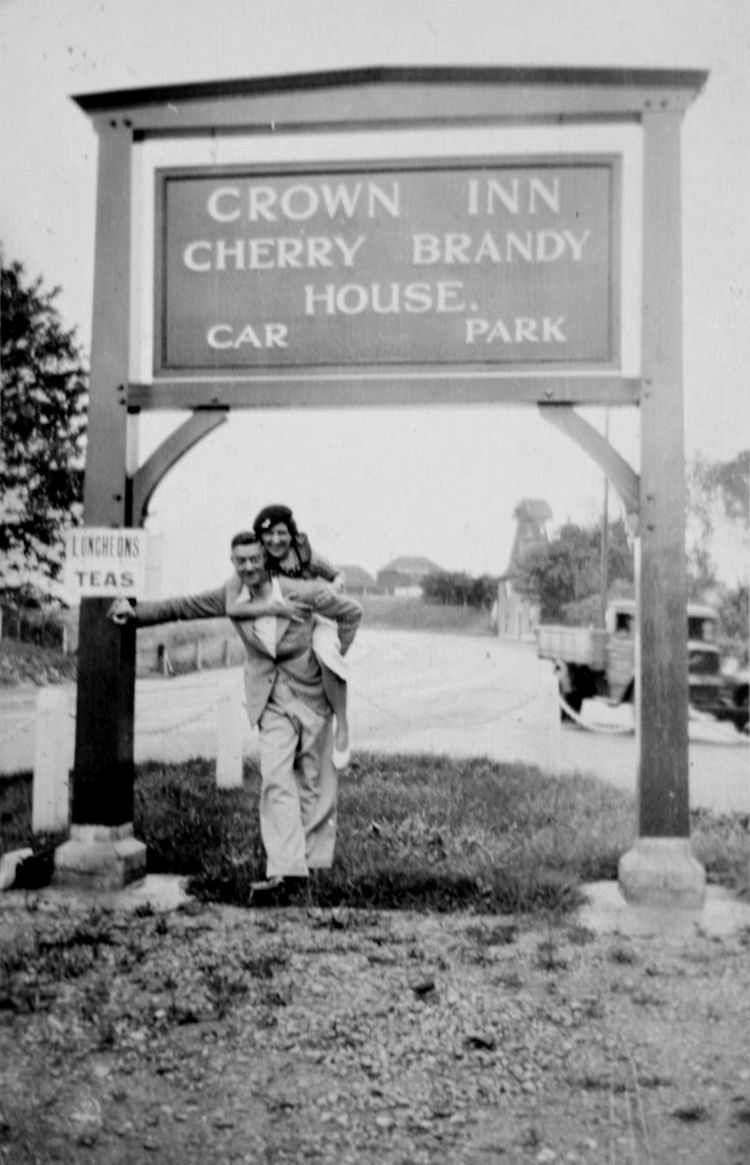
Above photo, circa 1936, kindly sent by Rory Kehoe. People in photo
unknown. |
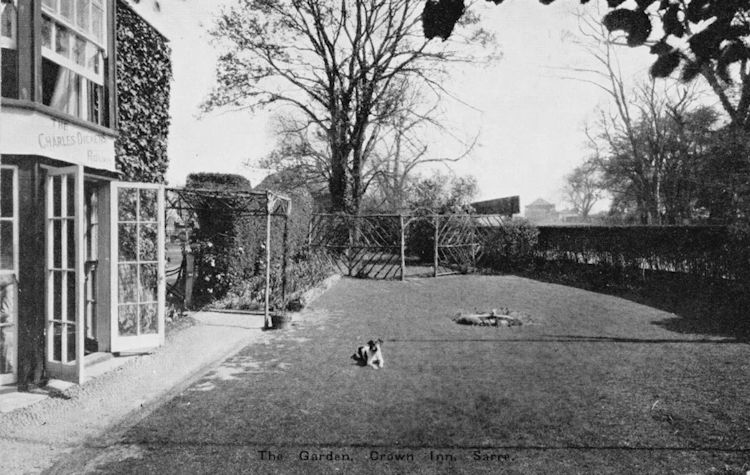
Above postcard circa 1936, kindly sent by Rory Kehoe. |
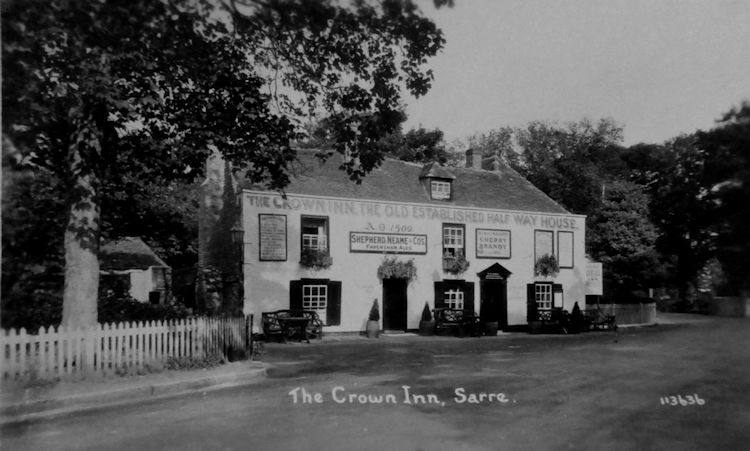
Above postcard, circa 1939, kindly sent by Rory Kehoe. This
photograph appears to have been taken just before WW2: the name over the
main door reading G H Gordon. |
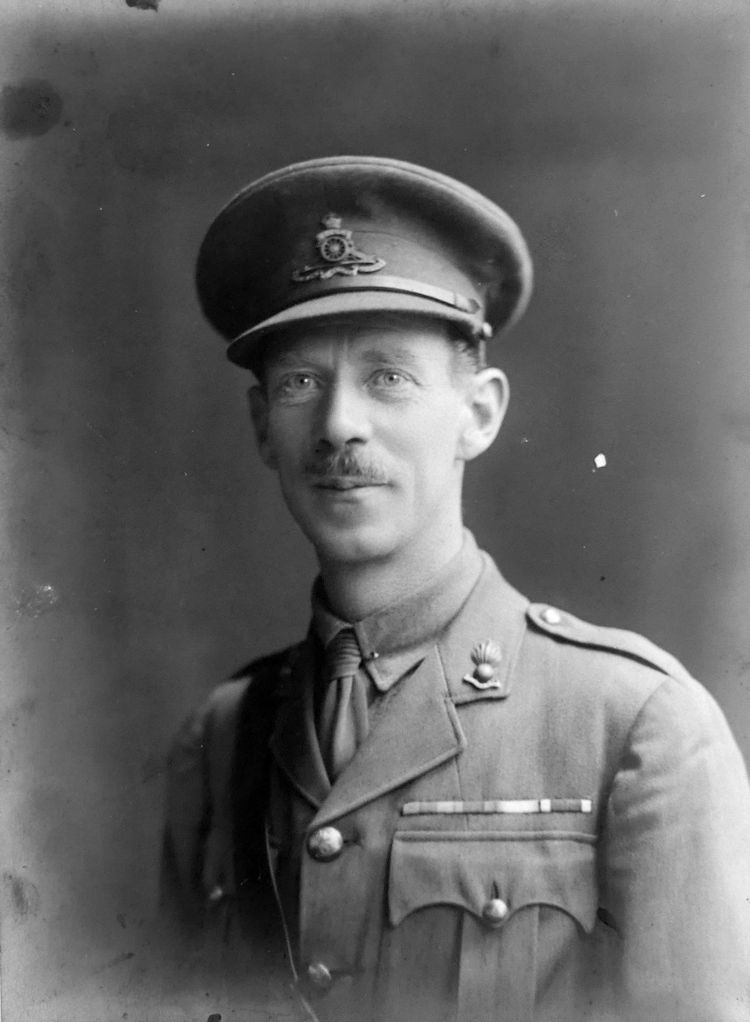
Colonel G H Gordon DSO, CMG was a distinguished career soldier and
officer in the Royal Field Artillery. Colonel Gordon served from 1915 to
1918 on the Macedonian Front, as part of the Allies' Salonika Campaign.
The photo of Colonel Gordon probably dates from c.1914, when he was a
Major, prior to rank insignia migrating from being worn on officers'
lower sleeves to their epaulettes. |
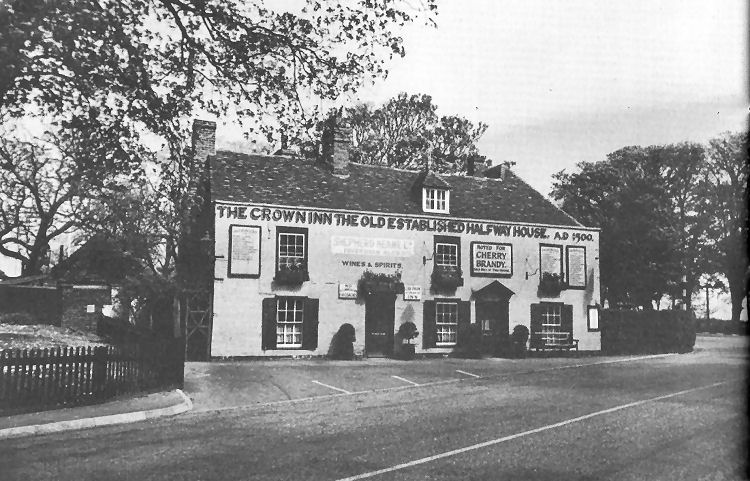
Above photo, circa 1940s. |
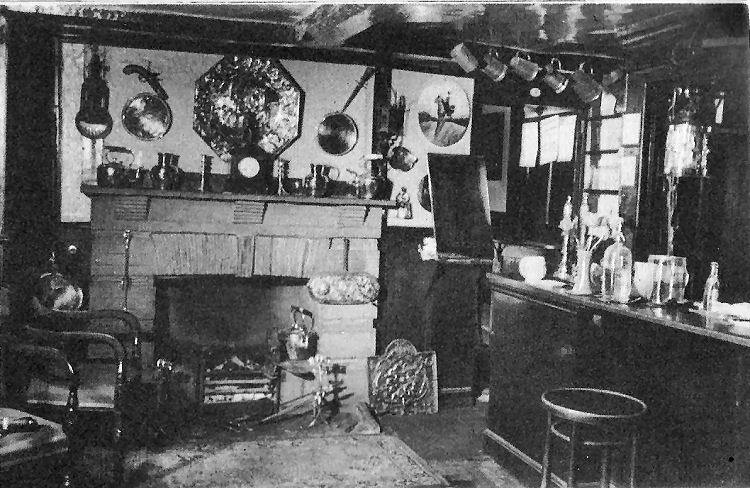
Above photo showing the bar area circa 1940s. |
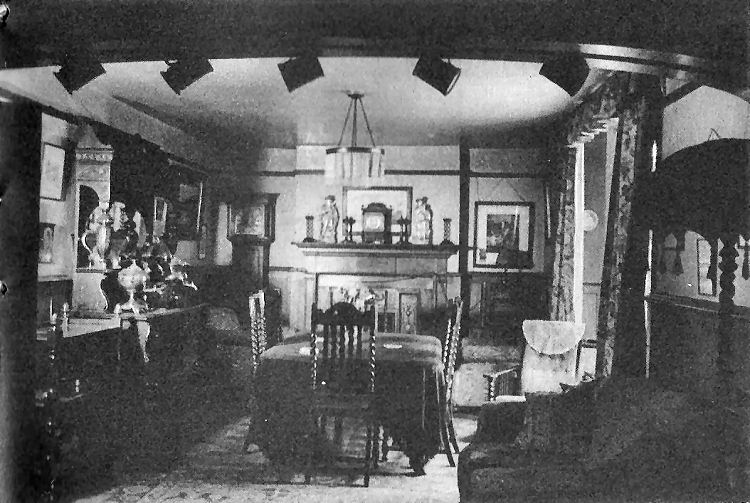
Above photo showing the "Dickens Room," circa 1940s. |
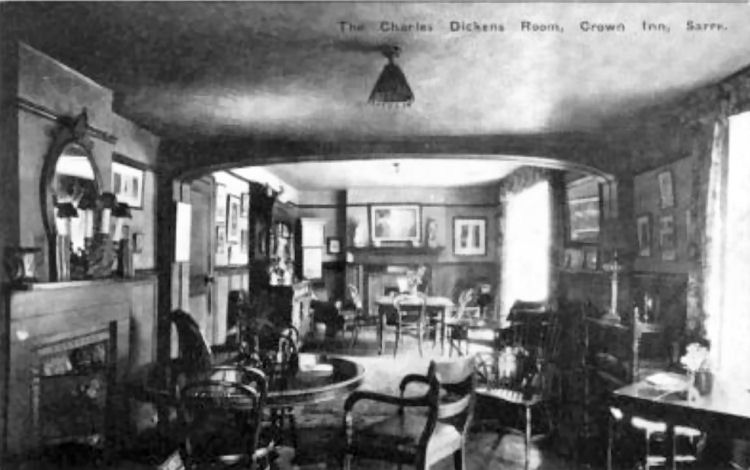
Above postcard showing the Dickens Room. Kindly sent by Debi Birkin. |
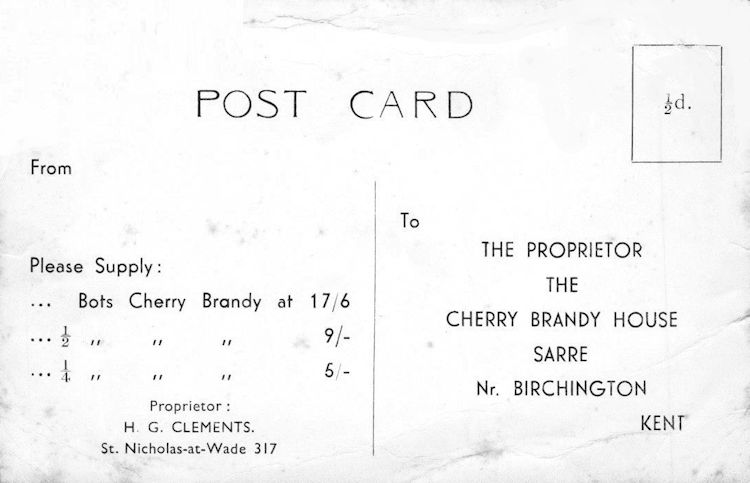
Above postcard, circa 1946, kindly sent by Rory Kehoe. Mr Clements is
listed as licensee just after WW2. However, the inland postal rate for
postcards doubled, from 1d to 2d, on 1st May 1940, which suggests that
this card very much pre-dates this price increase. Could Mr Clements
have been at the Crown immediately after Alfred Loft, in the period
1915-18, when mailing a postcard only then cost 1/2d? Currently then,
something of a mystery. |
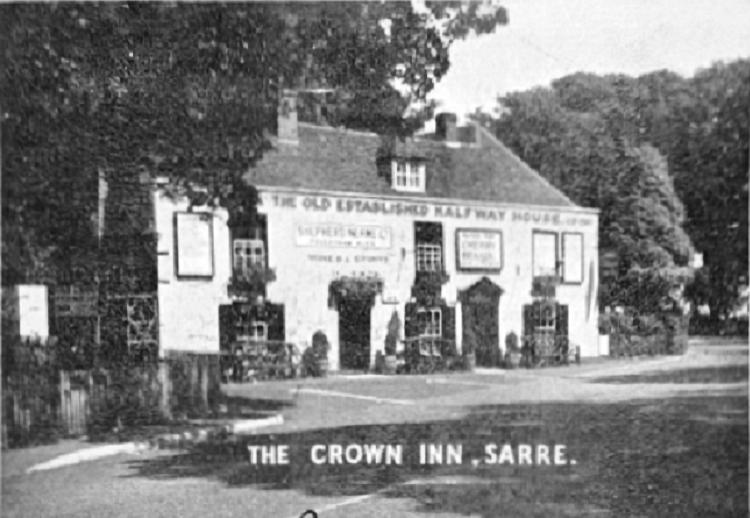
Crown 1948, kindly sent by Rory Kehoe. |
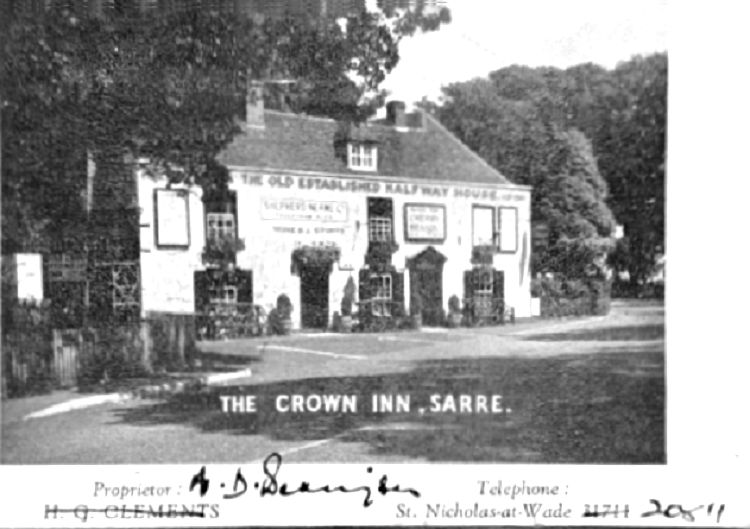
Above advertising card 1948. Kindly sent by Rory Kehoe. |
|
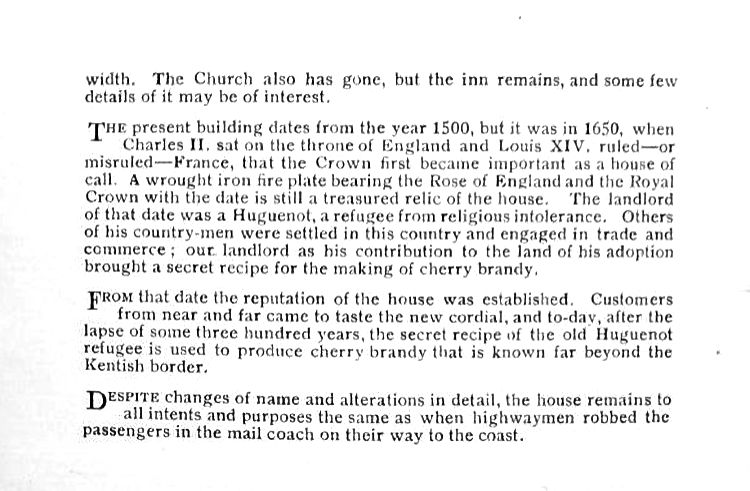
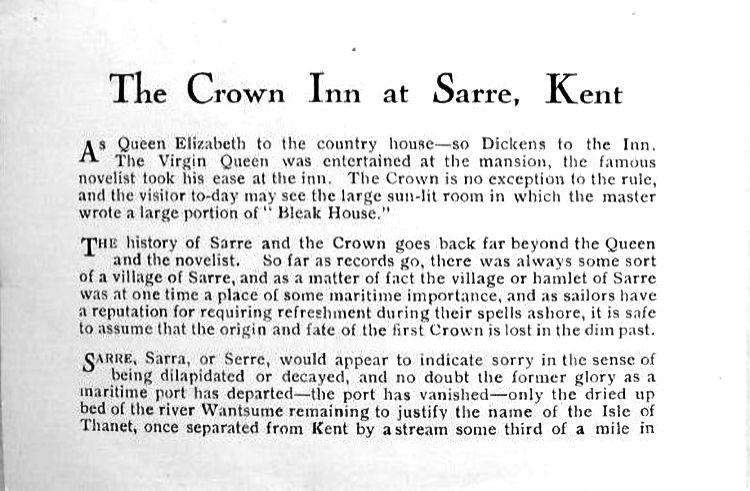
Inside of advertising card 1948. Transcript below:-
The Crown Inn at Sarre, Kent.
As Queen Elizabeth to the country house — so Dickens to the Inn. The
Virgin Queen was entertained at the mansion, the famous novelist took
his ease at the inn. The Crown is no exception to the rule, and the
visitor to-day may see the large sun-lit room in which the master wrote
a large portion of “Bleak House.”
THE history of Sarre and the Crown goes back far beyond the Queen and
the novelist. So far as records go, there was always some sort of a
village of Sarre, and as a matter of fact the village or hamlet of Sarre
was at one time a place of some maritime importance, and as sailors have
a reputation for requiring refreshment during their spells ashore, it is
safe to assume that the origin and fate of the first Crown is lost in
the dim past.
SARRE, Sarra, or Serre, would appear to indicate sorry in the sense of
being dilapidated or decayed, and no doubt the former glory as a
maritime port has departed — the port has vanished — only the dried up
bed of the river Wantsume remaining to justify the name of the Isle of
Thanet, once separated from Kent by a stream some third of a mile in
width. The Church also has gone, but the inn remains, and some few
details of it may he of interest.
THE present building dates from the year 1500, but it was in 1650, when
Charles II. sat on the throne of England and Louis XIV. ruled — or
misruled — France, that the Crown first became important as a house of
call, A wrought iron fire plate bearing the Rose of England and the
Royal Crown with the date is still a treasured relic of the house. The
landlord of that date was a Huguenot, a refugee from religious
intolerance. Others of his countrymen were settled in this country and
engaged in trade and commerce; our landlord as his contribution to the
land of his adoption brought a secret recipe for the making of cherry
brandy.
FROM that date the reputation of the house was established. Customers
from near and far came to taste the new cordial, and to-day, after the
lapse of some three hundred years, the secret recipe of the old Huguenot
refugee is used to produce cherry brandy that is known far beyond the
Kentish border.
Despite changes of name and alterations in detail, the house remains to
all intents and purposes the same as when highwaymen robbed the
passengers in the mail coach on their way to the coast. |
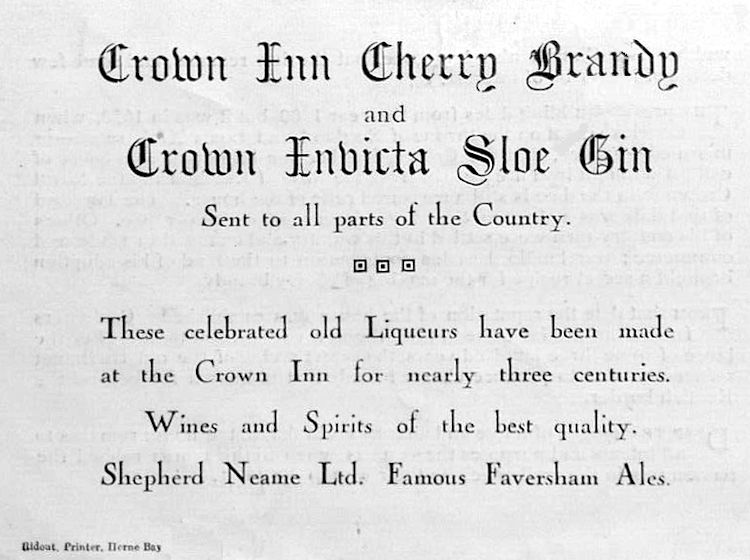
Above card circa 1948, kindly sent by Rory Kehoe. It would appear,
looking at this publicity card, that there was a licensee and telephone
number change at the "Crown" in the late 1940s. H G Clements being
superseded by B D Seamington(?) Also, the middle and back pages of the
card. |
|
|
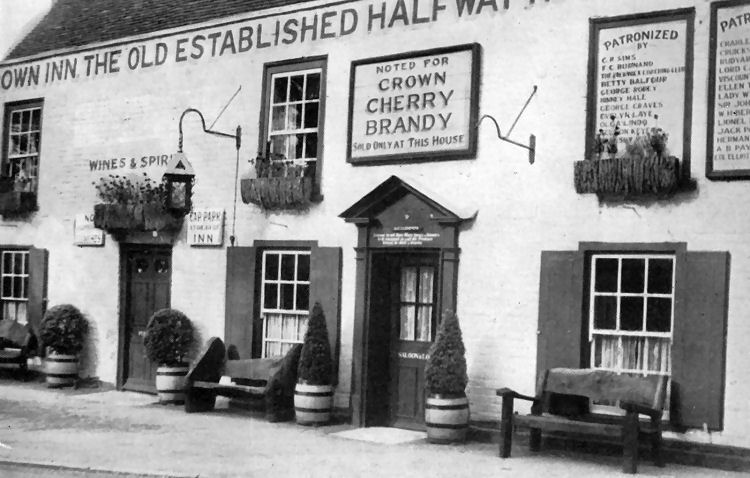 Above
photo 1950s. |
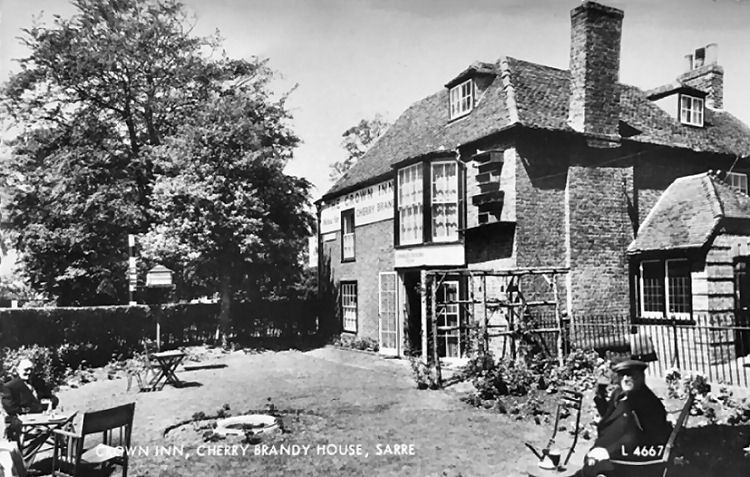
Above postcard, circa 1951, kindly sent by Rory Kehoe. |
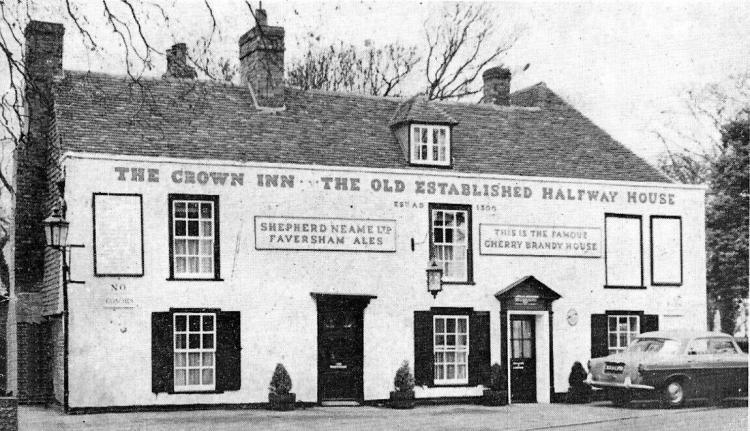
Above photo, circa 1959, kindly sent by Rory Kehoe. |
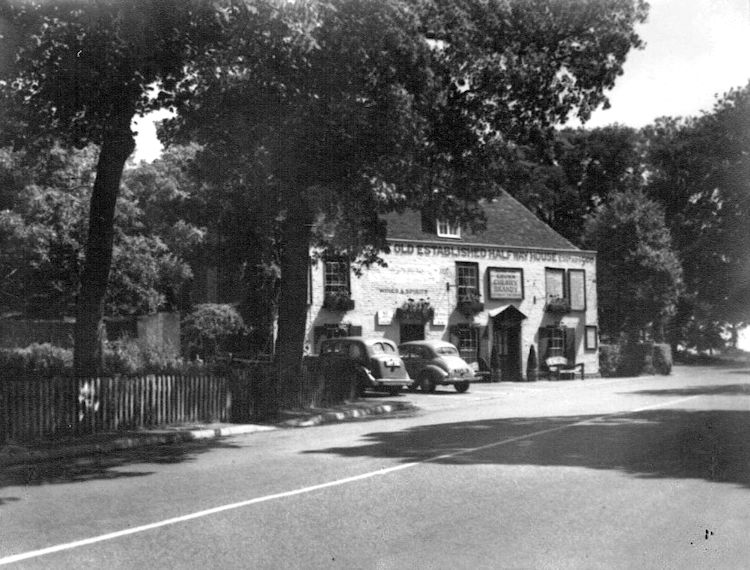
Above photo, circa 1960, kindly sent by Rory Kehoe. |
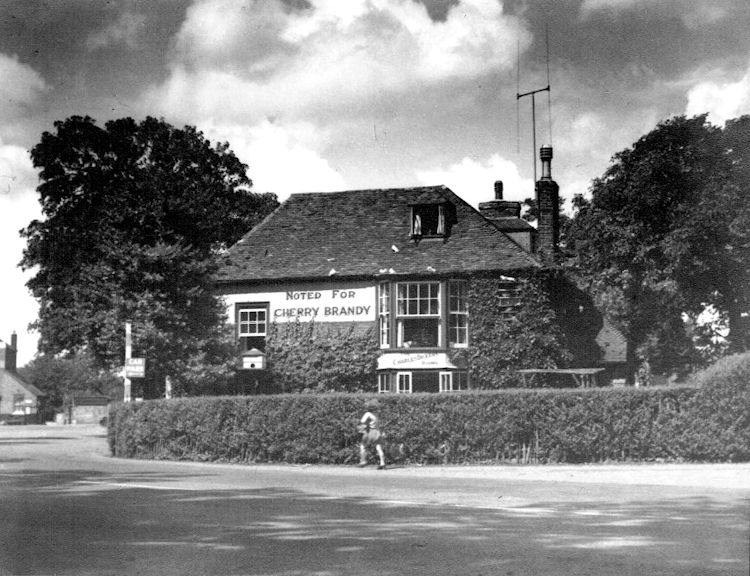
Above photo, circa 1960, kindly sent by Rory Kehoe. |
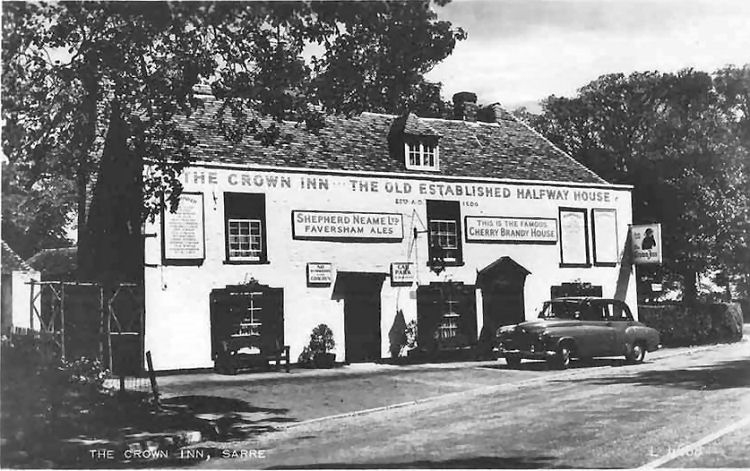
Above postcard, circa 1961, kindly sent by Rory Kehoe.
|
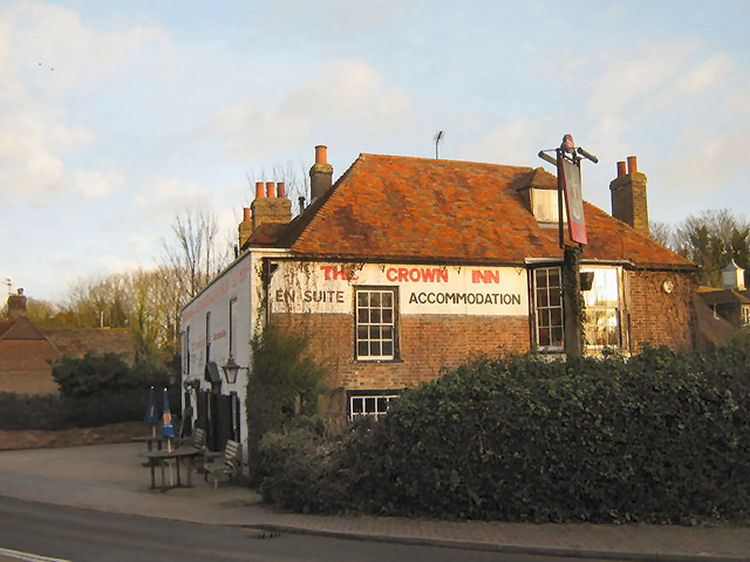
Above photo 2011 by David Anstiss
Creative Commons Licence. |
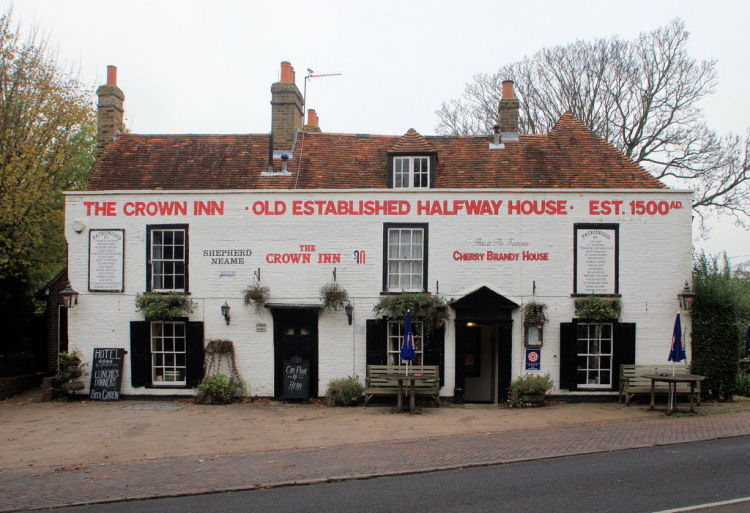
Crown Inn at Sarre.
|
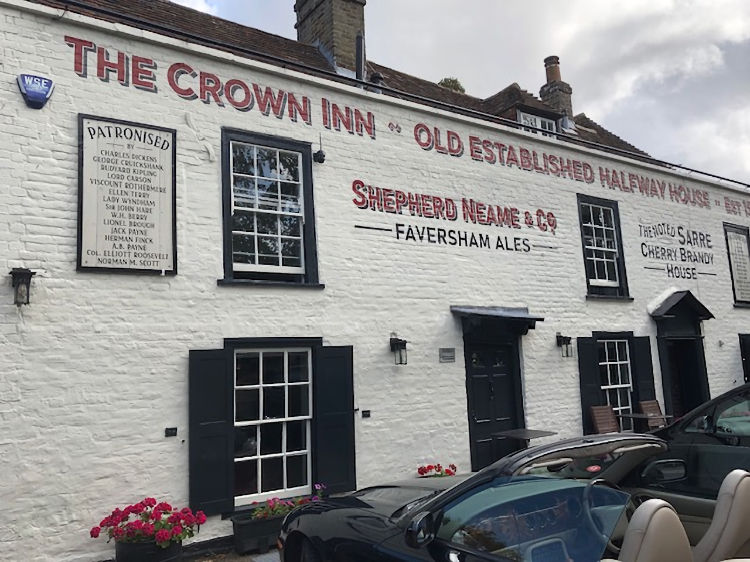
Above photo August 2024, kindly sent by Michael Harris. |
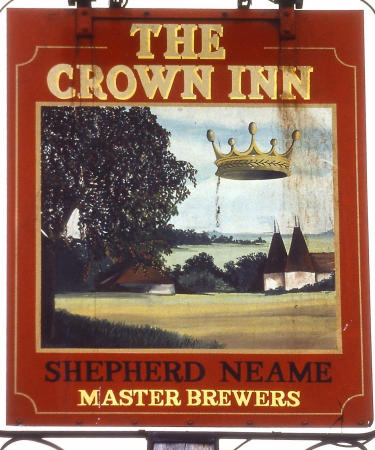
Above sign date unknown.
With thanks from Roger Pester
www.innsignsociety.com |
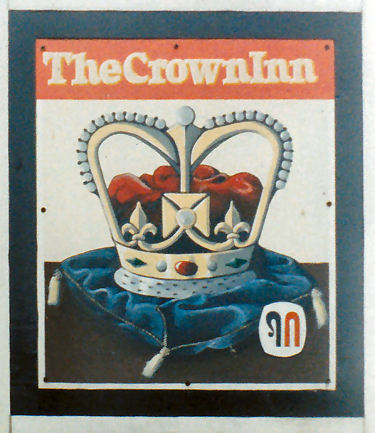 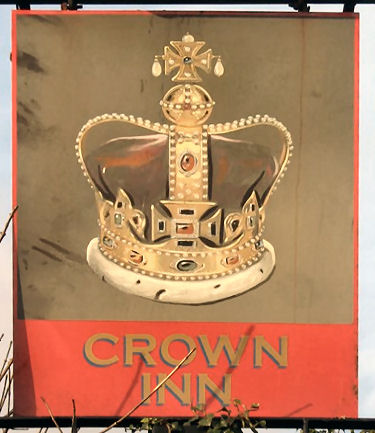
Crown sign
left May 1986. Sign right 2011.
Above with thanks from Brian Curtis
www.innsignsociety.com |
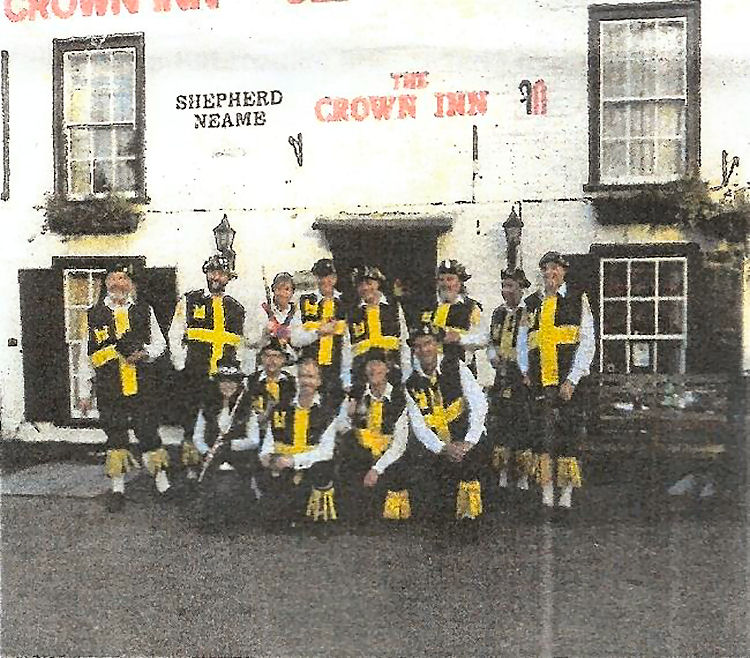
Above photo, 2015, kindly sent by Rory Kehoe. Showing the Wantsum
Morris Men, probably taken during their annual pilgrimage to the Crown
every Boxing Day. |
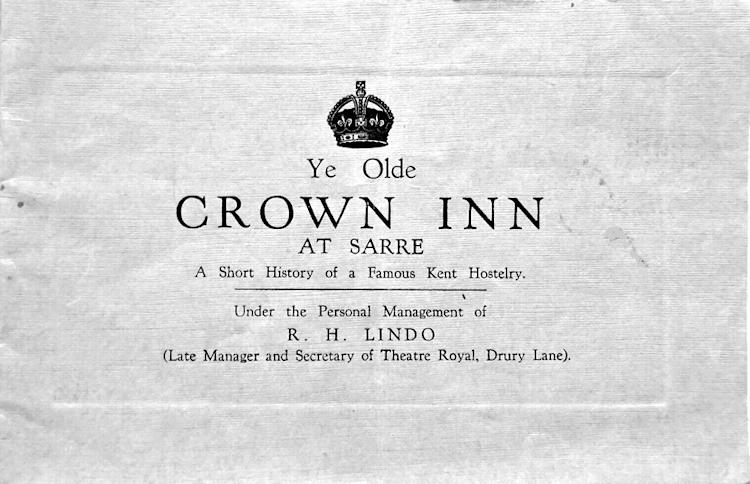
Above card, circa 1932, kindly sent by Rory Kehoe. Front cover of a
Crown Inn short history pamphlet. Mr Lindo clearly had an interesting
background, which may help to explain why so many members of the
entertainment scene in the 1930s came to visit his pub. |
|
Kentish Chronicles, 22 December, 1795.
Death.
Sunday morning died, Mr. Strood, many years landlord of the
"Halfway House" between this city and Whitstable.
|
|
Kentish Gazette 8 April 1800.
TO BE SOLD BY AUCTION.
ON the premises, on Monday, the 21st day of April instant, about four
o’clock in the afternoon:-
All that long-established and good-accustomed Inn, called the
"CROWN," otherwise the "HALF-WAY-HOUSE" at Sarr, in the Isle of
Thanet, contiguous to the high road from Canterbury to Margate and
Ramsgate consisting of a large and commodious messuage, with
coach-house, stable, and other conveniences, well adapted for
carrying on the public line of business, now in the occupation of
Mrs. Mary Richford.
The premises may be viewed by applying to Mr. Thomas Wraight at Sarr,
of whom, and of Mr. J. Solly, Sandwich, further particulars be
known.
Possession may shortly be had.
|
|
Kentish Gazette 21 July 1801.
On Wednesday, as Mr. Derby, of the "Halfway House" between
Margate and Ramsgate, was walking in a field by the road, he heard
the cries of a child in the corn, and discovered a new-born infant,
left by its unnatural parent without any clothing. On its being
examined by a surgeon, he supposed it had not been born more than an
hour. The most diligent search was made for the wretch who had
abandoned it, but without success. The infant was taken to the
workhouse, and continues perfectly well.
|
|
From the Kentish Gazette, 18 December 1810.
DEATH.
Some time since, at Sarr, Mrs. Mary Richford, widow, many years of
the "Crown Inn," of that place.
|
|
From the Kentish Gazette, 21 December 1810.
DIED.
Lately, at Sarr, Mrs. Mary Richford, widow, many years of the "Crown
Inn," at that place.
|
|
Kentish Weekly Post or Canterbury Journal 29 May 1821.
POINTER DOG.
Came Astray on the 10th of October last, a Young Pointer Dog, liver coloured
and white.
Whoever owns the said Dog may have him again by paying his keep and expenses,
on application to Mr. F. Holmes, "Crown Inn," Sarre.
|
|
From the Kent Herald, 21 October 1824.
On Friday night last, a poor woman age 71 years, expired suddenly at the "Crown
Inn," Sarre, in the Isle of Thanet. For several days previous she had complained
of a pain in her bowels, and had taken some Epsom salts for the same; soon after
her supper on the above evening, she was taken with difficulty of breathing, and
before a neighbouring surgeon, who was immediately sent for, arrived, she had
breathed her last. She was a pensioner of the neighbouring parish of St.
Nicholas, where she had formerly resided.
|
|
From the Kent Herald, 19 January 1826.
Kent. Freehold and Leasehold Public Houses and other Estates.
At Word, Fingersham, Northbourne, Sutton (next Dover,) Eastry, Tilmanstone,
Eythorne, Frogham, Womenswould, Addison, Barham, Woodnesborough, Goodnestone
(next Wingham,) Ash (next Sandwich,) Shoulden, Walmer, Ramsgate, Margate, Sarr.
St. Peter's, (Thanet) and Sandwich.
For sale by auction, by Pott and Denne.
At the "Bell Inn," in Sandwich, on Monday, the 13th day of February, 1826, at 11
o'clock in the forenoon precisely, (subject to such conditions and restrictions
as will be then and there produced,) the following Freehold and Leasehold Public
Houses and Estate's, in 27 lots, viz:-
Lot 1:- The "Crispin," public house, at Word.
Lot 2:- The "Jolly Gardener," ditto, at Finglesham, in the parish of Northbourne.
Lot 3:- The "Hound and Hare," ditto, at Northbourne.
Lot 4:- The "Star and Boot," ditto, at Sutton (next Dover.)
Lot 5:- The "Bull," ditto, at Eastry, with cottage adjoining.
Lot 6:- The "Three Colts," ditto, at Tilmanstone.
Lot 7:- The "White Horse," ditto, at Eythorne.
Lot 8:- The "Red Lion," ditto, at Frogham.
Lot 9:- The "Rose and Crown," ditto, at Woolwich Green, in the parish of Womanswould.
Lot 10:- The "Bull Head," ditto, at Adisham.
Lot 11:- The "Duke of Cumberland," ditto, at Barham.
Lot 12:- The "Charity," ditto, at Woodnesborough.
Lot 13:- The "Three Crowns," ditto, Goodnestone (next Wingham.)
Lot 14:- The "Admiral Harvey," ditto, at Ramsgate.
Lot 15:- The "Ship," ditto, at Ramsgate, with two small cottages at the back.
Lot 16:- The "Red Lion," ditto, at St. Peter's, (Thanet) with cottage adjoining.
Lot 17:- The "Crown and Thistle," ditto, at St. Peters, Thanet.
Lot 18:- The "Crown," ditto, at Sarr.
Lot 19:- The "King's Head," ditto, in Walmer Road.
Lot 20:- The "Duke of York," ditto, in Walmer Road.
Lot 21:- The "Chequers," ditto, in the Sandhill's, in the parish of Shoulden.
Lot 22:- The "Ship Inn," at Ash next Sandwich with extensive stabling, yard,
Gardens, &c.
Lot 23:- A Dwelling House, near or adjoining the last lot, in the occupation of
Mrs. Maria Green.
Lot 24:- Three Cottages, adjoining the last lot, with the gardens used theirwith,
now in the several occupations of Vincent Noble Kennard, John Harrison, and
Steven Solly.
Lot 25:- All that building and Hop Oast, next or adjoining the last lot now in
the occupation of Mr. Thomas Minter Tomlin
Lot 26:- A Freehold Dwelling House, and Premises, in Church Square, Margate, in
the occupation of William Dale.
Lot 27:- The "New Inn," in Sandwich, with Assembly Room, Theatre, Stables,
Yards, &c.
N.B. Lots 19, 20, and 21, are leasehold, and all the others freehold.
The premises may be viewed on application to the respective tenants, and printed
particulars had (seven days prior to the day of sale) of the auctioneers, and at
the "Bell Inn," Sandwich; "Kings Head Hotel," Canterbury;
"Antwerp Inn" Dover;
"Black Horse Inn," Deal; "Spread Eagle Inn," Ramsgate; "York Hotel," Margate; of
Mr. Benjamin Hall, Solicitor, No. 2, Serjeant's Inn, Fleet Street, London; and
at the offices of Mr. Noakes, Solicitors, Sandwich.
|
|
Sussex Advertiser 20 February 1826.
At the sale of the public houses and other estates, situate in the eastern
parts of the County of Kent, which took place at the "Bell Inn," Sandwich,
on Monday last, Messrs. Pott and Denne knocked down the following lots, at
the sums affixed to them, viz.:—
The "Bull," at Eastry, £1,190.
"Three Colts," Tilmanstone, £500.
"White Horse," Eythorne, £575.
"Red Lion," Frogham, £455.
"Rose and Crown," Womenswould, £166.
"Duke of Cumberland," Barham, £910.
"Charity," Woodnesborough, £710.
"Three Crowns," Goodnestone, £620.
"Admiral Harvey," Ramsgate, £1,150.
"Ship," Ramsgate, £1,250.
"Red Lion," St. Peters, £1,100.
"Crown and Thistle," St. Peters, £705.
"Crown, or Halfway-house," Sarr, £940.
"King's Head," Walmer Road, £425.
The "Duke of York," Walmer Road, £310.
The sale-room was most numerously attended.
We understand that the "Ship," at Ash, and "Crispin," at Worth, have since
been sold by private contract, the former for £750, and the latter for five
hundred guineas.
|
|
Kentish Gazette 25 June 1844.
ISLE OF THANET SHEEP SHEARING ASSOCIATION.
The annual meeting took place on Thursday last at Sarre. The shearing
commenced at twelve o'clock, and the prizes were awarded as follows:—
First prize to No. 9, J. Collins, in the employ of Mr. Collard, Gore
Street. second ditto, to No. 14. A. Horn. in the employ of Mr. Gaskell
Third ditto to No. 15, J Wile., in the employ of Mr. J Dadds Fourth
ditto to No. 7, T. Browning, in the employ of Mr. S. Smith.
First prize for wooI winding to No.14. A. Horn. Second ditto to No. 15,
J. Wiles.
There were seventeen competitors, and the shearing was allowed by all
present to be very much improved since last year. A great increase has
taken place in the number of members, there by improving the funds of
the society, so much so that it is expected the premiums will be
enlarged at the next annual meeting.
The members, after the shearing, dined at the "Crown Inn," Sarre, and
partook of an excellent dinner, provided by Mr. Holmes, at which Mr.
Champion presided, and Mr. S. Smith officiated as the deputy. The usual
loyal toasts were drank, and well received by the company. There were
nearly forty of the neighbouring farmers and graziers at the dinner.
Messrs. Wacker, T. Bing, and T. Slater, officiated as judges.
There were as usual several woolstaplers at the meeting, and a great
deal of wool was sold at advanced prices. The company were very much
pleased with the presence of one of the French wool buyers, M. Duplas;
and he seemed equally delighted with the day, and promised to attend
again, if possible, the next year.
|
|
Kentish Gazette, 25 June 1844.
TO FLORISTS AND OTHERS. SARRE PINK AND PANSEY SHOW.
The annual dinner is fixed for Wednesday, the 3rd of July, 1844,
(instead of the day before advertised), at the "Crown Inn," Sarre, at
Three o'clock, when the favour of any Gentleman will be esteemed.
E. WOOTTON, Secretary.
June 24, 1844.
|
|
Kentish Gazette 11 November 1845.
TO DEBTORS AND CREDITORS. NOTICE.
All Persons indebted to the Estate of the late Mr. Francis Thomas Sharp
Holmes, late of the "Crown Inn," Sarre, are requested forthwith to pay
the amount of their respective Debts to Mr. Edward Stark, of Sarre
aforesaid, Plumber, or Mr. Sackett Adams, of Monkton, Blacksmith, the
Executors of his Will or to us on their behalf. And all Persons having
any claims on the said Estate, are requested to send particulars thereof
as above, in order that they may be examined, and if correct,
discharged.
Kingsford, Son and Wightwick.
Canterbury. 8th Nov.,1845.
|
|
Kent Herald, 13 November 1845.
To Debtors and Creditors. Notice.
All persons indebted to the Estate of the late Mr. Francis Thomas Sharp Holmes,
late of the "Crown Inn," Sarre, are requested forthwith to pay the amount of
their respective debts to Mr. Edward Stark, of Sarre, Plumber, or Mr. Sackett
Adams, of Monckton, Blacksmith, the Executors of his Will, or to us on their
behalf. And all Persons having any claims on the said estate, are requested to
send particulars thereof above, in order that they may be examined, and if
correct discharged.
Kingsford, Son, and Wightwick, Canterbury, 8th November, 1845.
|
|
Whitstable Times and Herne Bay Herald, 9 April 1870.
ROBBERY AT CHISLET.
James Gibbons, on bail, was indicted for having stolen £2 in money and
18lbs. of flour, value 2s., the property of his masters, Henry Hudson
and Son, at Chislett, on the 10th of March, 1870.
Mr. F. J. Smith prosecuted, and Mr. Barrow defended the prisoner.
Mr. Barrow remarked that the charge of stealing the money was dismissed
by the magistrates, and yet to his surprise it had been included in the
indictment. However, unusual as this coarse was, he would not complain,
because, from circumstances which would come out in the course of the
case, he was rather glad than otherwise the two charges had been
included.
Mr. Smith having opened the case, he called William Henry Hudson, who
said he was the junior partner of the firm of Hudson and Son, millers,
at St. Lawrence, Thanet. Prisoner had been in his service nearly five
years. It was his duty to go out and deliver flour. He did so on the
10th March, and eight sacks were given to him to take out. Before he
started witness weighed 286lbs. The flour was then placed in the waggon.
Prisoner was not present when the flour was weighed. Prisoner was to go
to Chislett with the flour. Prisoner left at eight o'clock in the
morning, and he took four and a half hours to get to Chislett while
three and a half hours was quite sufficient. Witness went by train to
Grove Ferry, and thence to Chislett. He was at Mr. Johncock's when the
prisoner arrived. The whole of the flour was for Mr. Johncock. The sacks
were weighed by Mr. Johncock and his baker. Two of them were found to be
short by 18lbs. The other six sacks were correct. Mr. Johncock paid
witness £2 in copper coin, which was done up in 5s. packets. He put the
money into the waggon and told prisoner to "take thorn coppers home.”
Prisoner then started and witness passed him on the road. Prisoner did
not return home, but left the waggon and horse at a public-house at
Sarre and absconded. Prisoner came back on the following Monday and said
he was sorry for what he had done.
Cross-examined:— Before prisoner was in witness' employ he was employed
by Mr. Hooper. He (prisoner) had been in the neighbourhood a long time.
By the Chairman:— I told the prisoner about the flour being missed at Chislett, and gave him the coppers to take home afterwards.
Wm. Johncock, baker, Chislett, said he weighed the sacks, and two of
them were short. He paid £2 worth of coppers to Mr. Hudson. He heard Mr.
Hudson speak to the prisoner, but did not know what he said. On the same
day he went to the "Crown Inn" at Sarre, and there saw the prosecutor's
waggon. The horse had been taken out. On the following Monday he was
between Sarre and Upstreet, and found some flour in a dyke there. Some
flour was also found dry on the shore. The flour so found was here
produced, and witness said he considered it was similar to that which
was delivered to him in the sacks.
Edward Wood said he was in the employ of Mr. Hudson, whose evidence be
corroborated as to the weighing of the flour. He gave the prisoner 10d.
before he started to pay the gates and for "allowance." The flour
produced was of the same quality as that sent to Mr. Johncock.
William Moss said he was station-master at Birchington. The prisoner
came to his station on the 10th of March at 6.41 in the evening, took a
ticket for Whitstable, and paid for it is coppers. The purse was not
full.
Cross-examined:—If the purse had been full it could not have held £3
worth of copper coin.
Alfred Caple, in the service of the landlord of the "Hare and Hounds,” Chislett, said he went to Sarre and got the waggon from the "Crown." He
did not know if there was any money in the waggon.
Mr. Hudson, recalled, said, in answer to Mr. Barrow, he had sometimes
paid the prisoner his wages in copper.
Mr. Barrow, in opening his address to the jury on behalf of the
prisoner, remarked that the Chairman presided at that Court for the
first time. Therefore he would not take the coarse which he would take
if he were before the late Chairman, who had had very large experience
in criminal matters. He did not think it fair to the Chairman in the
very first case heard before him, to ask him to take upon himself to
decide that there was no evidence to go before the jury. Although he did
not take that course, because he felt it might put the Chairman, in his
somewhat novel position, in a state of some little embarrassment; yet he
called his attention to the fact, which he submitted to the jury with
the greatest possible confidence, that there was not, from the beginning
to the end of the case, a particle of evidence that affected the
prisoner in the slightest degree. Nobody had seen him do anything with
either the money or the flour. With regard to the flour, was it not as
reasonable to suppose he was robbed as that he was the robber, and as to
the money it was quite possible that that was taken away by some person
during the prisoner's stay at the public house at Sarre. Then as to the
prisoner's conduct in absconding, there was no doubt he was frightened,
first by being accused of a theft and then at losing the money, and that
he went away in consequence.
The Chairman in summing up said the learned counsel for the defence had
commenced by saying that, out of consideration for himself, he would not
place before them one view of the case, namely, that there was no
evidence at all to go before the jury. He could not conceive that any
counsel weald be so oblivious of his duty as to neglect placing before
them that view of the case which would be most advantageous to the
prisoner he was defending. Supposing for a moment that that would be the
course adopted by the learned counsel on this or any future occasion, he
hoped that no consideration for the Chairman or the magistrates would
prevent him adopting that course which would be most advantageous to the
prisoner he was defending. He then went through the circumstances of the
case, and went through the circumstances of the case and the jury
acquitted the prisoner.
|
|
From the Deal, Walmer, and Sandwich Mercury,
23 June, 1900. 1d.
EXTENSIONS
John A. Wright, proprietor of the "Crown," of Sarre, was granted an
extension to 11.30, for a party who intended celebrating the fall of
Pretoria at his house on the 26th inst.
|
|
The Era 14 November 1928.
From Ricard H. Lindo, so long associated with Sir Arthur Collins at
Drury Lane Theatre, and now the popular host at that historic
rendezvous, "The Crown Inn," Sarre, on the main road between Canterbury
and Birchington, has just written an interesting book, which he has
titled "From Stage to Bar." This entertaining little volume of
reminiscences has many anecdotes from stories of "The Lane," from the
author's first association in 1899 until the final break up of the old
regime, towards the end of 1918, whereas he relates someone wishfully of
the changed conditions of the theatre, the departure of the "old
school," and the coming into being of the modern type of manager, the
product of a theatre controlled by speculators of allsorts. George Rober,
Dan Leno, George Graves, Violet Cameron, Beerbohm Tree, F. C. Barnard,
Sir Squire Bancroft, Irene Vanbrugh, are but a few of the celebrities
who figure in Mr. Land's narrative, which closes with his retirement
from the stage, and his "call to the bar."
Mr. Lando invited a number of friends the other evening to the "Crown"
for what he termed "the inauguration" of his weekly steak and kidney
suppers. The guests came from Margate, Ramsgate, Westgate-on-Sea and
Birchington, and there was an interesting gathering under those old ok
beams. The evening was further enlivened by the appearance of Mr. E.
Thornley Dodge, who gave some of his inimitable studies stories and
lightening sketches, which pleased the company immensely.
|
|
Thanet Advertiser, Tuesday 21 March 1944.
Misused Petrol. Home Guard Officer Fined.
Henry G. Clements, 70 year-old licensee of the "Crown Inn," Sarre, and a
lieutenant in the Home Guard, was fined 10s., with £1 7s. costs, at St.
Augustine's Sessions, Canterbury, on Wednesday, for misusing petrol
allowed him as a Home Guard Officer.
Mr. T. T. Cropper prosecuted and Mr. C. A. Gardner for defendant,
admitting a technical offence.
The case for the prosecution was that the petrol was allowed defendant
in order to drive to Herne Bay and collect subsistence money from Lloyds
Bank for the men. On 1st January he paid an abortive visit to the bank,
as it was closed, and he went again the following week. On each
occasion, instead of returning by the direct route, he admitted that he
visited an old friend at Herne Bay, went on to see his daughter at the
"Fox and Hounds," and then returned via Blean Wood to Sarre, having gone
some seven miles out of his way.
Lieutenant Colonel C. S. F. Witts, defendants C.O., said defendant was
allowed a gallon of petrol weekly for Home Guard duties and was not
permitted to deviate from the direct route. Defendant was very patriotic
and showed it by his good work for the Home Guard.
In evidence the defendant said that his work and Home Guard duties he
had no spare time. He went to Herne Bay by the direct route and visited
his daughter to help her, for which he had previously been allowed
petrol but it had been stopped. Witness told Mr. Copper that he could
not recall telling the constable that he visited his daughter in that
way on 20th November, 4th and 11th December and 1st and 8th January.
Mr. Gardner said defendant and never drawn a penny from the Home Guard.
|
|
From the East Kent Mercury,
31 August, 1989.
LONG WAIT FOR A DRINK
The 15th century "Crown Inn," at Sarre, better known locally as the
Cherry Brandy House, has closed for a six month £500,000 refit.
The work will include the addition of 10 letting rooms, dining room,
kitchen and a complete upgrading of the pub's existing facilities.
To ensure none of the character of one of Kent's most historic pubs
is destroyed brewers Shepherd Neame have taken photographs of the bar
areas to help them return all its ornaments to their old positions after
the work is finished.
A feature of the pub has been its collection of autographed
photographs of stage and screen stars of the 1920s and 30s.
Built in 1492 the "Crown Inn" is steeped in history. Charles Dickens
wrote part of Pickwick Papers there. And a condition of the licence is
that it must always sell cherry brandy made to a 17th century Huguenot
recipe - hence its more popular title of the Cherry Brandy House.
|
|
Taken from the Shepherd Neame web site, December 2011.
The "Crown Inn" at Sarre has welcomed a variety of distinguished guests
over the years, from novelist Charles Dickens to Prime Minister Edward
Heath.
Its obvious appeal – its 15th century origins, comfortable
accommodation, good food, warm hospitality and lovely garden – continues
to be discovered by countless visitors.
The Crown Inn is known locally as the Cherry Brandy House on account
of its sale of the popular drink. (I will add
here that I have been to the pub and did ask for a Cherry Brandy, and
the barmaid hadn't a clue what I was on about. Paul Skelton.)
The Grade I listed building boasts an impressive history. It is
thought to have started life as a coffee house and features a
priest-hole. It is, perhaps, no wonder that the BBC Ghosthunters
programme filmed at The "Crown Inn."
Open all day, every day, the "Crown Inn" has much to offer, from fine
food and accommodation to a wide selection of ales and wines and the
friendliest of welcomes. (No Cherry Brandy
though, apparently.)
|
|
From the
https://www.kentonline.co.uk By Secret Drinker, 29 May 2020.
Secret Drinker's best Shepherd Neame inland Kent pubs.
The fantastic response to my top five seaside pubs, added to the fact
many locals are already planning for the glorious day they can reopen,
has persuaded me I must also bring you my top Shepherd Neame inland
pubs.
Just imagine the joy of sitting in a beautiful pub garden, a freshly
pulled pint in your hand, while the sun blazes down and the birds
twitter sweetly in the background.
I took some flak for daring to dream of the time we can revisit a lovely
seaside boozer and gaze upon the waves again, but why shouldn’t we have
something to look forward to?
If seven out of 10 people reckon the thing they’ve missed most during
lockdown is the pub then just imagine getting back to these five
fantastic pubs.
The only rule I set to be an inland pub is that if you look out of the
window you can’t see the sea.
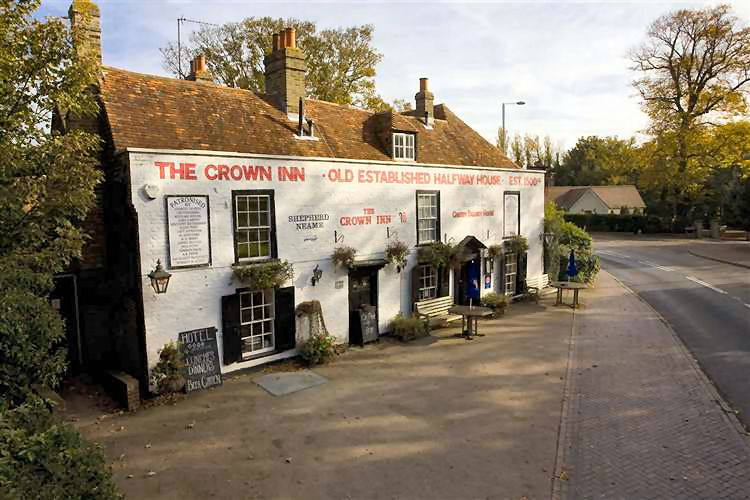
The No.1 pub on my list - the Crown Inn at Sarre.
And, in top spot, another pub I haven’t had the chance to review yet,
though I did have the pleasure of popping in just hours ahead of
lockdown.
The Crown Inn at Sarre, near Birchington, can boast a fantastic history
dating back more than half a millennia. You might take the list of
famous names with a pinch of salt but one thing that’s beyond question
is the quality of the food – bangers and mash to die for.
I love the rustic, down-to-earth feel but this large than life pub gets
all the details right. Excellent, warm-hearted customer service combined
with great food and drink – and Clive behind the bar who reckons he
responds best to ‘Oi’, what more could you want?
I need to write a full review as soon as possible.
|
|
From an email received 6 April 2021.
Hello,
My grandfather Col. George Hamilton Gordon DSO, CMG, was the
landlord in 1938/39.
My mother who died at 102 in 2014 had strong memories of being in the
kitchen, and my aunt who is still, alive at 95, in New Zealand also has
fond memories.
My grandfather was a regular soldier, and spent most of the Great War
in Salonika. He was an artillery officer, I still have his medals, as
well as quite a few pictures of him, several with Winston Churchill, and
aircraft, as he and my grandmother were friends of Commander Charles
Rumney Samson one of the original 8 members of the RNAS .
Regards,
Rob Henley.
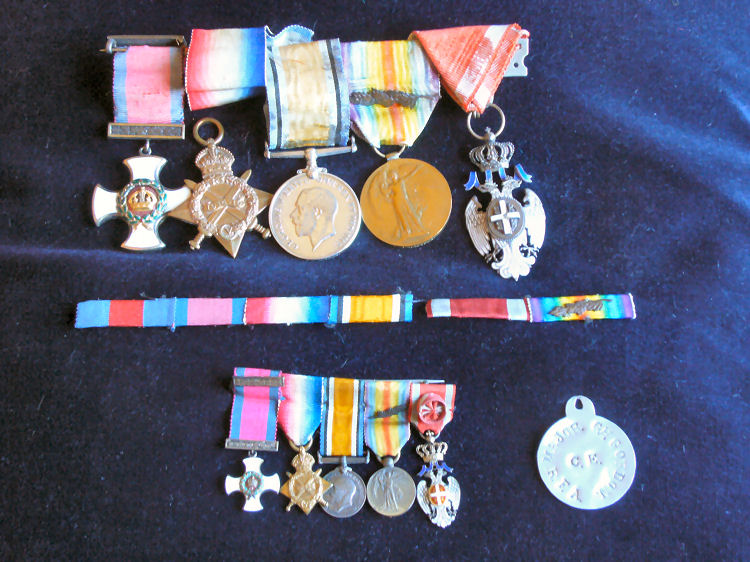
Above photo showing his medals.
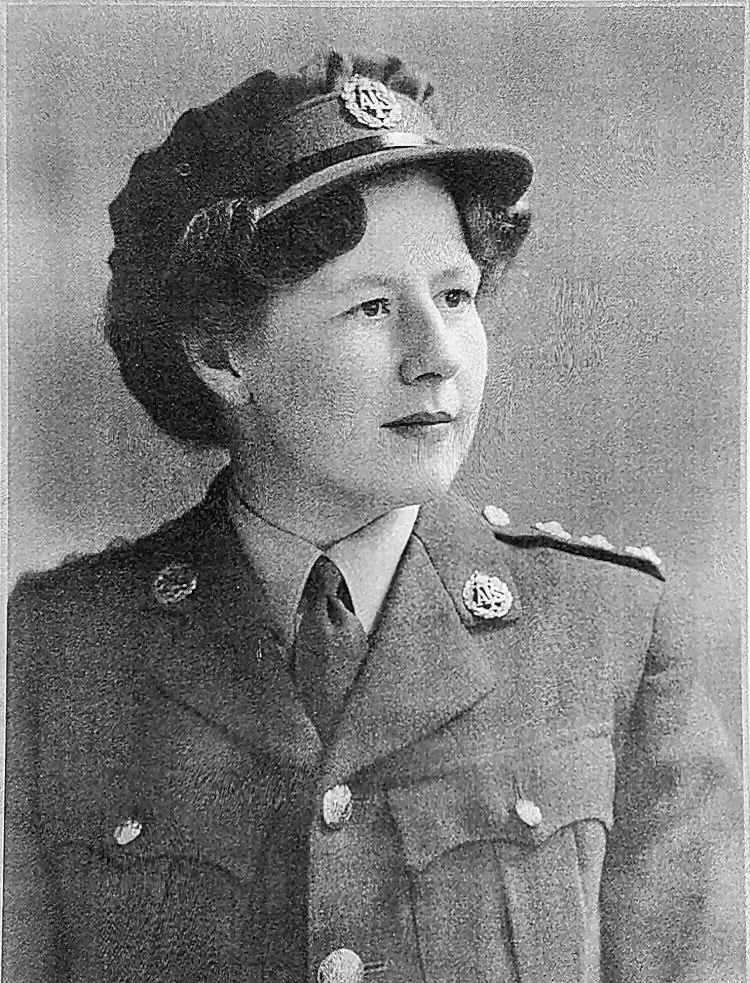
Above photo showing Suzanna Gordon when in the ATS |
The legend is that the resident pub ghost was a smuggler, who was killed
in the pub in the early 1800s. When he manifests, on numerous occasions, he
is wearing seafaring clothing of that period and surrounded by a strong
odour of rum.
In 1903 it is suggested the house was tied to Francis A White, Stourmouth Brewery. The
brewery was sold, along with 11 pubs, at auction in 1904 to Flint & Sons,
Canterbury, who sold on the Crown to Shepherd Neame in 1910. Still operating under Shepherd Neame in 2011.
|
From the
https://www.kentonline.co.uk By Millie Bowles, 12 August 2025.
Landmark Shepherd Neame pub, The Crown Inn, Sarre, put up for sale.
A landmark pub, famous for a secret cherry brandy recipe brought to
Kent by the Huguenots, has been put on the market.
The Shepherd Neame-owned The Crown Inn in Sarre, near Birchington-on-Sea,
dates back more than 500 years.
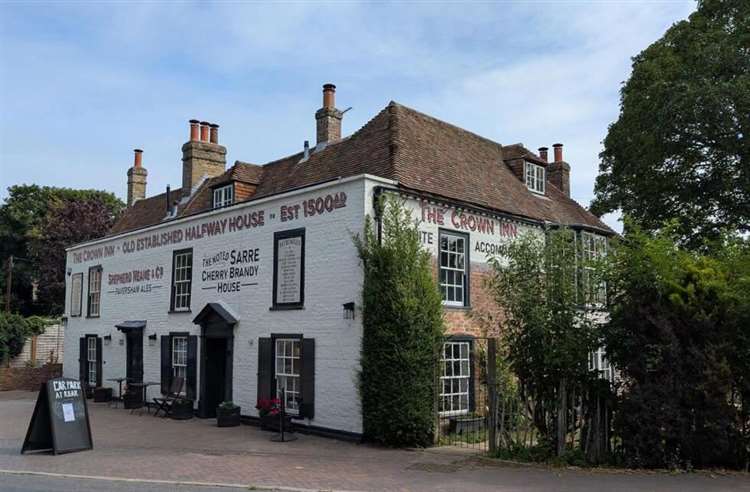
The Crown, Sarre, is up for sale. Picture: Rightmove.
The pub has a rich history and was the venue for the last Charge of
the Light Brigade survivors' dinner following the 1854 battle.
A copy of the menu and list of names are still on display.
The inn is also known as the Cherry Brandy House, due to the liquor
first being served there in 1774.
The recipe - Grants Morello Cherry Brandy - was brought to Kent by
French Huguenots fleeing religious persecutions of Louis XIV, and
customers can still order a glass or a bottle of it today.
The drink was a favourite of Queen Victoria and was mentioned in
Charles Dickens Pickwick Papers, with the author also reportedly
being a regular patron.
Estate agents Christie & Co describe The Crown as a “well-known
landmark”.
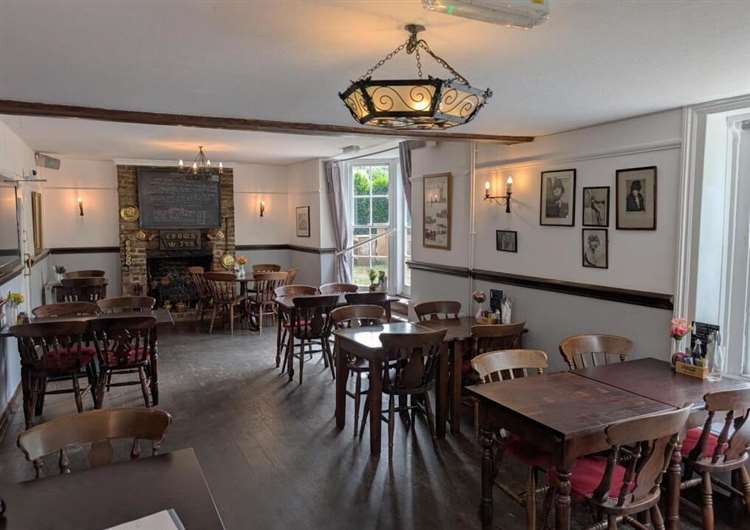
The Crown, Sarre, is owned by Shepherd Neame. Picture: Rightmove.
It is up for £750,000, with the brewery saying it “no longer fits
its business needs”.
The listing adds: “It is a Grade II-listed 15th-century building.
“The Crown Inn retains much of its original character with a 1990s
brick-built two-storey extension to the rear providing most of the
letting accommodation.
“It is well placed to take full advantage of the growing popularity
of east Kent.
“The coastal towns around draw visitors from around the world with
easy access to London, along with Canterbury.
“The Crown has the history and character to be a classic pub with
rooms in a busy location.”
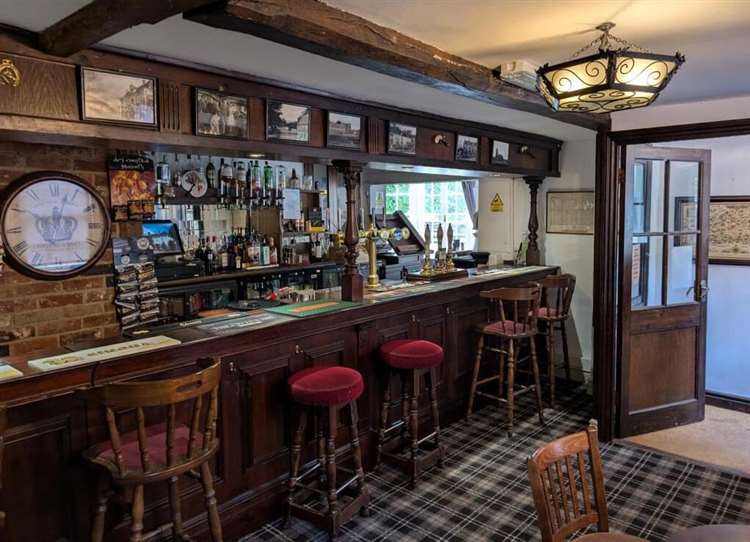
The Crown Inn, Sarre, is famous for a cherry brandy recipe brought
to Kent by French Huguenots. Picture: Rightmove.
The boozer boasts a bar, a restaurant and 14 accommodation rooms.
Shepherd Neame’s director of professional property, John Barnes,
told KentOnline: “After careful consideration, we have decided to
sell The Crown Inn, Sarre, as it no longer fits our business needs.
“The pub is currently being sold as a licensed premises.
“The sale is part of an ongoing evaluation of our property portfolio
to ensure that we target our resources effectively.”
Landlady Emma Simms took over the venue in 2023.
In 2020, KentOnline’s columnist The Secret Drinker hailed it his
favourite Shepherd Neame venue in Kent.
He said the atmosphere had a cheery, old-school feel. |
LICENSEE LIST
RICHFORD Mr 1777+

STROODMr to Dec/1795 dec'd
DERBY Mr 1801+
RICHFORD Mary (widow) to Dec/1810 dec'd
HOLMES Francis Thomas Sharp 1821-Nov/45
HOLMS Sarah 1841+ (age 60 in 1841 ) )
PAY Thomas William 1847-81+
 (age 69 in 1881)
POINTON Samuel James 1891+ (age 51 in 1891)
WRIGHT John Albert 1900-03+ (age
40 in 1901)
 
LOFT Alfred 1904-15+ (age 60 in 1911)
GRANT Louisa 1918-22+
 
LINDO Richard Henry 1928-32+

GORDON Colonel George Hamilton DSO, CMG 1938-39+

CLEMENTS Henry G 1946+
SEAMINGTON B D 1948+
SIMMS Emma 2023+
https://pubwiki.co.uk/Crown.shtml
From Melville's Directory 1858
From the Kelly's Directory 1903
From the Post Office Directory 1918
From the Post Office Directory 1922
From the Post Office Directory 1930
From the Post Office Directory 1938
From the Deal Walmer & Sandwich Mercury
Census
Kentish Gazette
|

